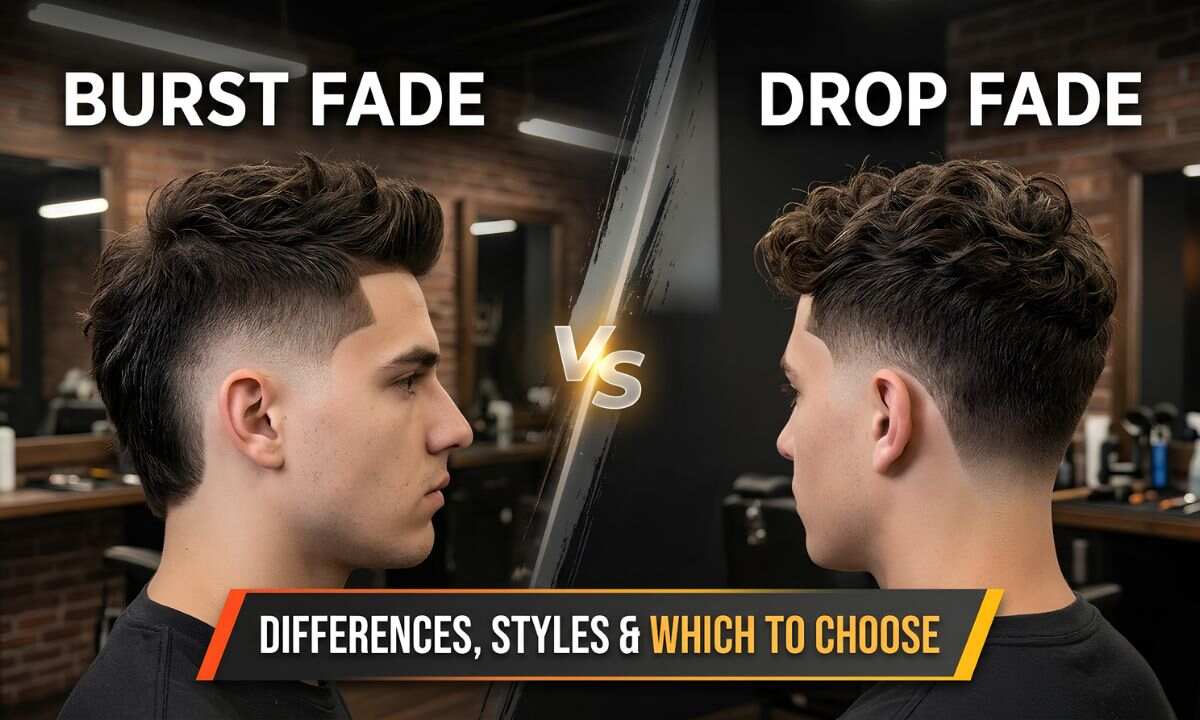

Here’s the short answer. A burst fade curves in a rounded arc around the ear and usually leaves length at the nape. A drop fade dips lower behind the ear and keeps fading through the back.
Pick the burst if you’re keeping a mullet or a fuller back. Pick the drop if you want one smooth fade that follows your skull. The rest of this guide shows you how to spot each one and ask for it.
What is Burst Fade vs Drop Fade
Think of the difference between burst fade and drop fade as a question about the route. Both start at the sideburn. Then they split. One circles the ear and stops, and the other keeps traveling.
A burst fade haircut puts its shortest hair in a half circle around the ear. The hair behind that circle stays longer. A drop fade haircut runs the fade line lower behind the ear and carries it around the back.
Most people mix them up because both can be low, mid or high, and both can end in skin or shadow. Height and finish are separate choices. The shape is what makes the name, so that’s what you should look at first.
Burst Fade vs Drop Fade: Seven Matched Visual Comparisons
Words only go so far with haircuts. So let’s compare the two cuts on the same kind of top, one hair type at a time. Each comparison below changes only the fade path.
Here’s how to read them. Look past the ear and follow the fade into the back. If it stops in an arc, that’s a burst. If it keeps going, that’s a drop.
These examples cover burst fade vs drop fade differences across straight, curly, coily and wavy hair. Your own hair will behave a bit differently, so use them as a guide and not a promise.
Burst vs Drop Fade Straight Textured Crop
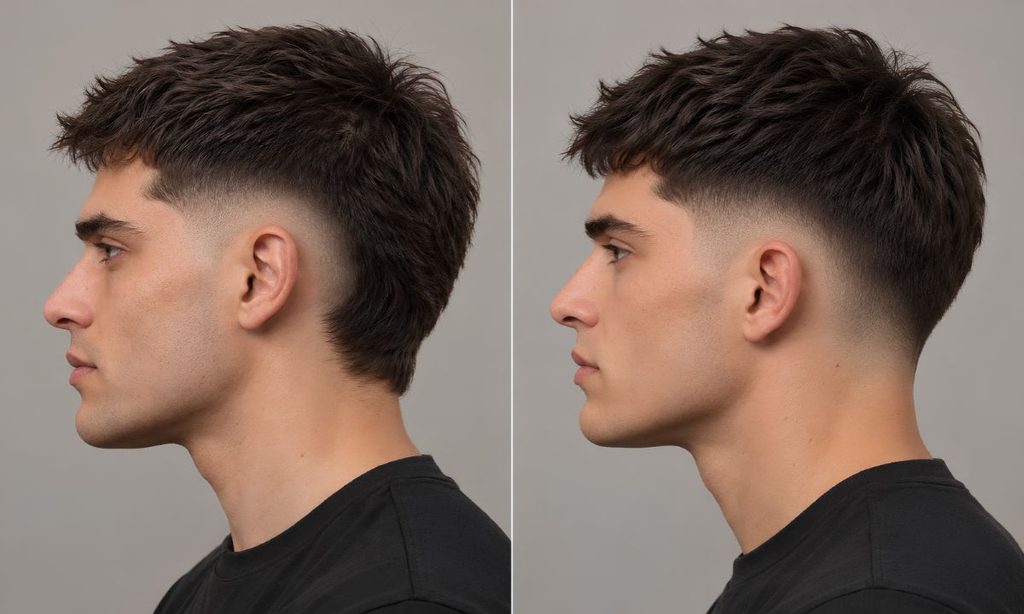
Start with a burst fade with textured crop on straight hair. The crop sits on top with a messy, choppy finish. Around the ear you’ll see a tight, rounded fade. At the back, the nape keeps its weight.
Now swap in a drop fade with textured crop. The top stays the same. The side blend slides under the ear and joins a shorter back. The head looks neater and more uniform from behind.
If your crop is short and you like a clean neckline, the drop usually fits. If you like a bit of rebellion at the back of your neck, the burst gives you that.
Burst vs Drop Fade Curly Top
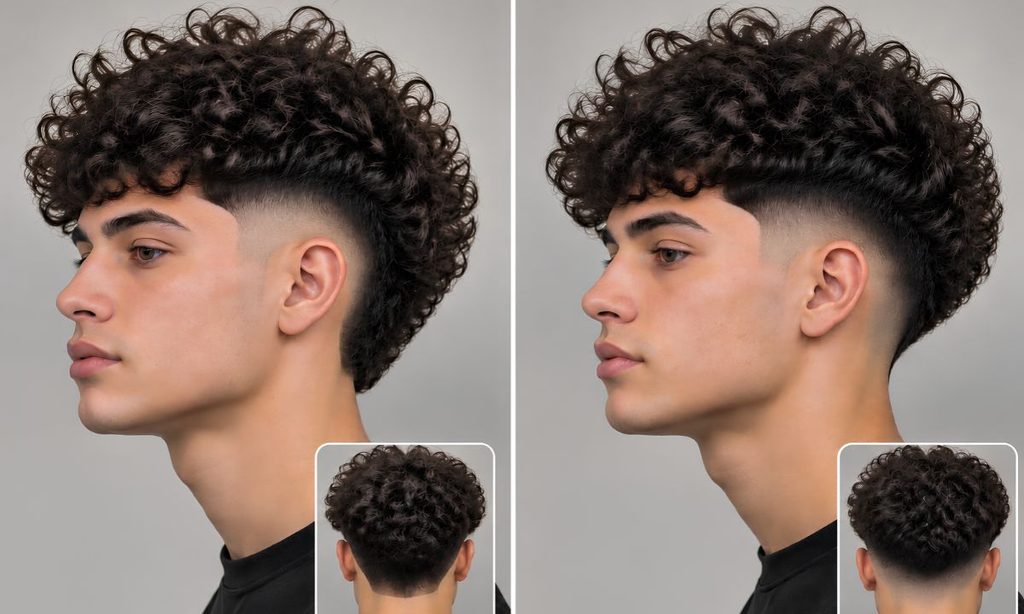
Curls change the story. With burst fade curly hair, the fade stays tight around the ear while the curls behind it stay full. The result looks soft and bouncy, with a sharp frame at the sides.
With drop fade curly hair, the blend keeps moving behind the ear. The curls at the lower back get shorter, so the whole shape looks tidier. It’s less shaggy and easier to keep off your collar.
So which is better for curls? If you want volume and movement all the way down, go with the burst. If you want a controlled shape, the drop is the safer call. That’s the core of burst fade vs drop fade for curly hair.
Burst vs Drop Fade Coily Top
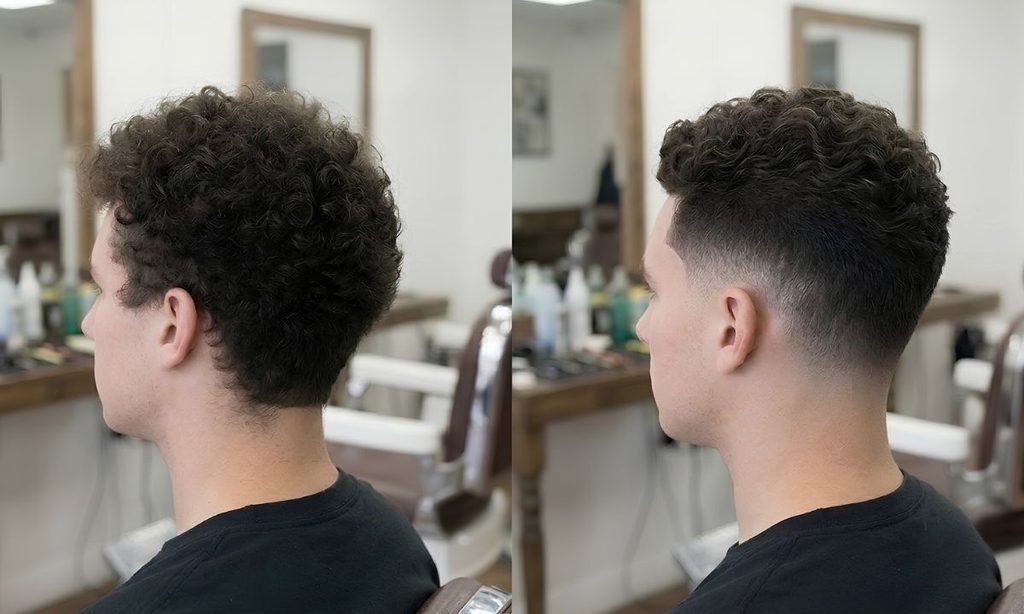
Coily hair shows contrast beautifully. A burst fade gives you a clear rounded edge at the ear, and the coils through the back make a strong ridge against it. It’s a bold look.
A drop fade on a coily crown does something different. The coils stay on top, but the fade keeps descending into the lower rear. That creates a smooth gradient from crown to neck.
Coily hair also shows lines faster than other textures, so clean edges matter. Ask your barber how they handle your hair type before the first cut. Good ones will happily explain.
Burst vs Drop Fade Wavy Rear Three-Quarter
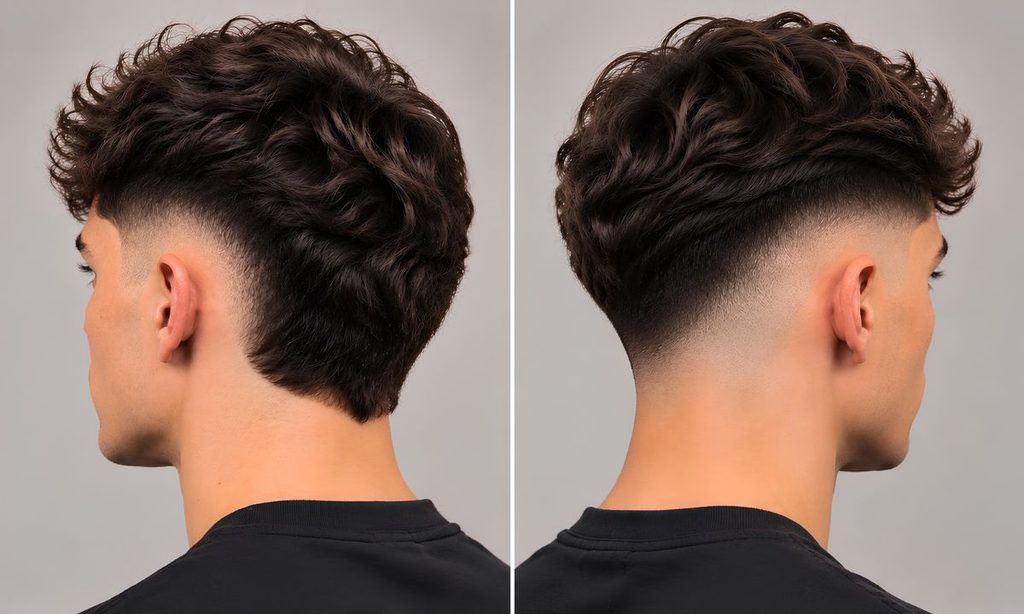
Turn the head to a rear three-quarter angle and the gap gets obvious. On burst fade with wavy hair, the ear arc ends and a fuller wavy back sits beside it. The waves look like they have room to breathe.
On drop fade with wavy hair, the rear blend connects to the side fade. Waves in the nape shrink. You get a continuous curve instead of a defined edge.
This is the angle your friends see when you walk away. If that view matters to you, ask for a rear photo before you commit. It beats guessing.
Burst vs Drop Fade Straight Rear Outline
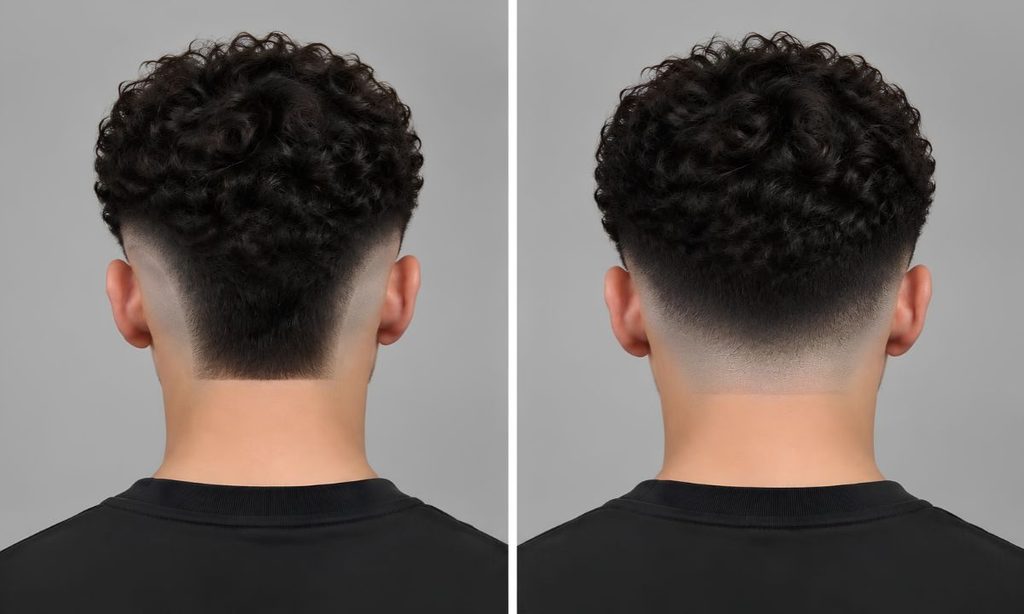
From directly behind, the burst shows its signature. Darker center back hair sits between two clipped areas by the ears. It reads like a small island of length.
The drop looks completely different from here. A connected, curved transition runs across the lower back. There’s no island, just a smooth band under the crown.
Check your burst fade back view and drop fade back view before every cut. Take a photo from behind and show it to your barber. It’s the fastest way to avoid a surprise.
A Burst Fade Wraps Around the Ear
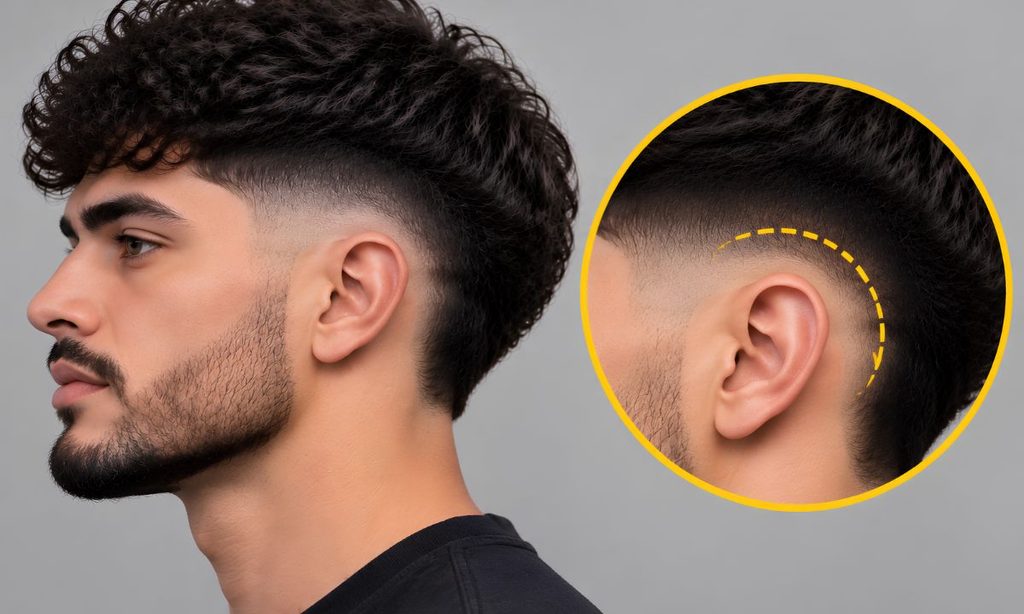
A burst fade hugs the ear like headphones sitting a little too high. The fade starts at the temple, rounds the ear and stops. This burst fade around ears look puts attention on your side profile.
That’s why the rounded burst fade shape is so popular with longer styles. The sides look sharp, and the back keeps its length. You get contrast without losing your tail.
Picture a guy named Marcus who’s growing out a mullet. He wants clean sides for work but hates losing his nape hair. A burst solves his problem in one cut.
A Drop Fade Drops Lower Behind the Head
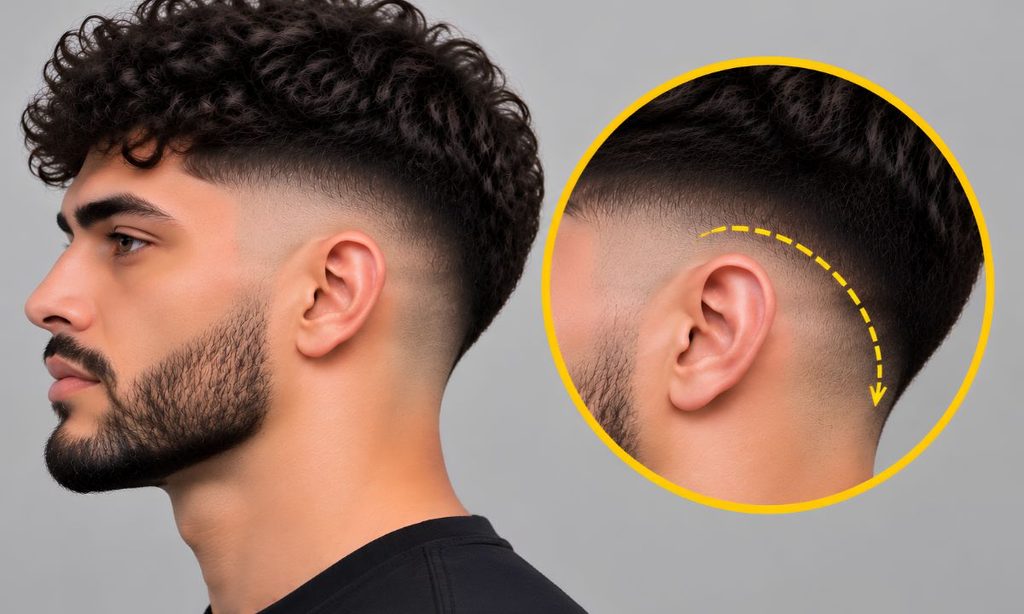
A drop fade bends downward behind the ear. The guideline doesn’t stay flat. It follows the curve of your skull toward the neck. That’s the curved drop fade shape people love.
This drop fade around ears is a full fade, so the back is part of it. Barbers often like it because it creates a polished, rounded silhouette. It works with a lot of tops.
Now think of Dev, who wears a short quiff and a collared shirt every day. He doesn’t want hair over his collar. A drop fade keeps the neckline tidy without extra effort.
Burst Fade vs Drop Fade: Three Placement References
Placement is everything here. A good mental image helps, so keep these three in mind when you scan photos online. They’ll save you a lot of confusion.
First, the burst: a compact arc centered on the ear, with a darker center back. Second, the drop: a continuous band that descends behind the ear. Third, the drop from the rear: a blend that stays connected instead of ending as an isolated arc.
Use burst fade side profile and drop fade side profile photos too. From the side, the two can look alike. From the back, they never do.
Burst Fade vs Drop Fade at a Glance
Need the quick version? This table puts the main differences side by side. Screenshot it and show it to your barber if you like.
| Feature | Burst fade | Drop fade |
|---|---|---|
| Shape | Rounded arc around the ear | Line dips lower behind the ear |
| Back length | Usually keeps more at the nape | Back is part of the fade |
| Pairs well with | Mullet, faux hawk, mohawk, curly or coily tops | Crop, quiff, curls, side part |
| Visual focus | Side profile and ear | Smooth shape from side to back |
| Grow out | Ear arc softens first | Curved band slowly loses contrast |
Notice the table compares the same things in each row. That’s on purpose. Shape and back length are the two rows that decide most orders.
What a Burst Fade Actually Does
A burst fade spreads outward from the ear instead of carrying one fade band through the back. That’s why it suits styles that need length behind the ear. The burst fade mullet is the classic example.
The finish is your call. Ask for a skin burst, a zero burst or a softer shadow burst. You can also choose a low burst fade, mid burst fade or high burst fade depending on how bold you want the contrast.
A low burst starts near the ear and feels subtle. A mid burst sits around the temple and gives a balanced look. A high burst is dramatic and shows the most skin.
What a Drop Fade Actually Does
A drop fade is still a continuous fade around the head. The difference is the guideline, which dips behind the ear instead of staying level. The back ends up with a U shaped curve.
That’s useful when you want a full fade but prefer it to follow your head. You can pick a low drop fade, mid drop fade or high drop fade too. Height changes how much hair you lose.
If you’re weighing a burst fade vs low drop fade, ask yourself one thing. Do you want the back preserved or blended? The answer settles it.
The Ear and Nape Test
Here’s a simple test when two photos look alike. First, look directly behind the ear. If the shortest area forms a focused semicircle, and the nape keeps real length, it’s a burst.
Next, check whether the fade continues through the back but dips lower behind the ear. If yes, it’s a drop. Two glances, and you’ve got your answer.
This matters because the cuts aren’t interchangeable. Blend away the back of a planned mullet with a drop and you change the whole silhouette. Leave the back heavy for someone who expected a drop and they’ll be just as unhappy.
Choose the Finish Separately
Burst and drop describe the path of the fade. Shadow, zero and skin describe how short it gets. Mixing those up is the most common mistake people make when they order.
A burst taper fade or drop taper fade keeps more hair at the bottom than a skin version. A taper is gentler, and it grows out gracefully. A skin finish is crisp, but it shows regrowth sooner.
Terms vary from shop to shop, so say out loud whether you want bare skin. One extra sentence saves you from a haircut you didn’t order.
Which One Should You Choose?
Still stuck? Let’s make it practical. Your lifestyle, your hair type and your top style should drive the choice. The fade should support your look, not fight it.
If you’re torn on burst fade or drop fade which is better, there’s no winner. Each cut solves a different problem. Use the lists below to match your situation.
Both can work as the best fade haircut for men who want a sharp look. The best pick is whichever one fits your hair and your routine.
Also read meaning on hairdaydiary.com
Choose a Burst Fade
A burst suits you when length at the back is part of your plan. It also suits guys who want a standout side profile. These burst fade hairstyles for men are bold by design.
- You want a mullet, faux hawk, mohawk or longer nape
- You want the cut to look best from the side
- You’ve got curls or coils you want to keep full
- You like strong contrast around the ear without losing the whole back
These burst fade haircut styles reward people who like a little edge. They also work if you hate the look of a fully shaved neck.
Choose a Drop Fade
A drop suits you when you want a clean, flowing shape. It’s friendly to office dress codes and everyday looks. These drop fade hairstyles for men are polished without trying too hard.
- You want a full fade that follows a lower curve
- You prefer a smooth transition through the back
- Your top style doesn’t rely on nape length
- You want the fade to wrap evenly from one side to the other
These drop fade haircut styles also pair well with a side part or a short quiff. The shape stays neat even when the top gets messy.
Drop Burst Fade: Can You Combine Them?
Yes, you can. A drop burst fade keeps the burst curve around the ear but lets the line keep dropping toward the nape. From the side it reads as a burst. From behind, it shows the lower curve of a drop.
The catch is that barbers use the name for slightly different cuts. So agree on two details before the clippers start. How far does the line drop, and does the center of the back stay long or get blended?
Try this script: “Burst shape around the ear, then drop the line behind the ear toward the nape. Keep the center of the back long. Finish at shadow.” It’s short, and it leaves no room for guesswork.
How to Ask Your Barber
Words matter at the chair. For how to ask barber for a burst fade, try: “Keep the fade rounded around the ear and leave the back length intact. I want a skin, zero or shadow finish at the shortest point.”
For how to ask barber for a drop fade, try: “Carry the fade around the head, but let it drop lower behind the ear instead of keeping the guideline level.” Short and clear works best.
Bring a side profile photo and a rear photo, especially if back length matters. Pictures remove doubt, and most barbers appreciate them.
Mistakes to Avoid at the Barber Chair
The first mistake is saying only “fade” and hoping for the best. That word covers dozens of cuts. Name the shape, the height and the finish.
The second is skipping the back view. Plenty of people choose from side photos and then feel shocked at the rear. The third is ignoring grow out, which we’ll cover next.
Here’s a quick tip. Ask your barber to show you the guideline with a comb before cutting. It takes ten seconds and prevents a lot of regret.
Maintenance and Grow-Out
Neither cut has a universal schedule. If you want the shortest area crisp, many people refresh a fade every two to three weeks. Your hair growth speed changes that number.
For burst fade maintenance, the rounded edge around the ear softens first. A shadow finish can look intentional for longer. For drop fade maintenance, the curved band slowly loses contrast through the sides and back.
The more contrast you choose, the sooner regrowth shows. If you want low effort, pick a softer finish. If you love a crisp look, book your next visit before you leave.
Frequently Asked Question
What’s the main difference between a burst fade and a drop fade?
A burst circles the ear and usually keeps length at the nape. A drop dips behind the ear and continues through the back.
Is a burst fade good for curly hair?
Yes. It keeps curls full behind the ear while framing the sides sharply. Many people with curls like the volume it preserves.
Can I get a drop fade with a mullet?
You can, but the drop trims the back. If you want a longer tail, a burst is the better match.
Which fade grows out better?
A softer shadow finish in either shape tends to grow out gracefully. Higher contrast shows regrowth faster.
Can I combine both?
Yes, a drop burst fade blends the two. Agree on the drop distance and back length first.
Conclusion
So, burst or drop? Choose the burst when you want a rounded ear arc and a back that keeps its length. Choose the drop when you want a full fade that curves lower and stays smooth through the neck.
Remember the three checks: look behind the ear, check the nape, and pick the finish separately. Bring a rear photo, and say what you want clearly.
Now it’s your turn. Which cut are you leaning toward, and what’s stopping you? Drop a comment, share this with a friend who’s stuck in the same debate, and come back as trends change. We’ll keep this guide fr.
