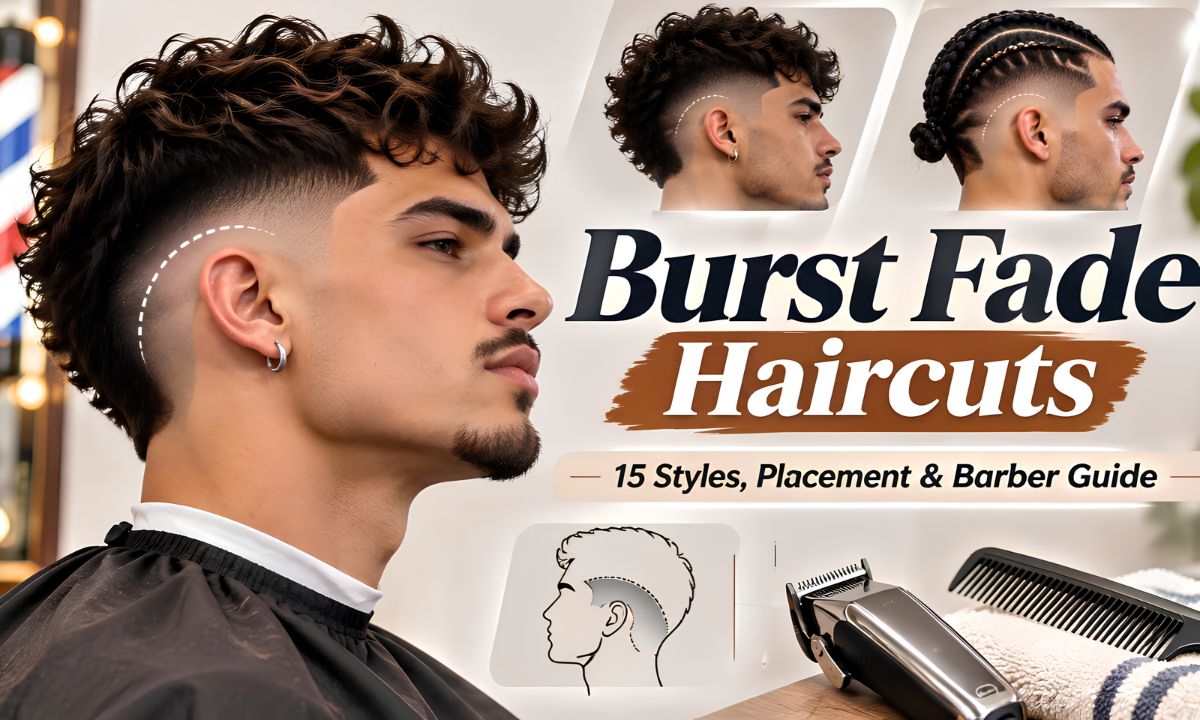

You’ve seen the cut on someone and thought, “What is that curve around his ear?” That’s a burst fade haircut. It’s a fade that wraps around the ear in a half-moon shape, while the hair behind it stays longer.
Here’s the short answer. A burst fade hairstyle is defined by where the fade sits, not by one top style. You choose the arc height (low, mid or high), the shortest finish (shadow, zero or skin), and how much length stays at the back.
Worried you’ll walk out with something you didn’t ask for? That’s the most common fear, and it’s fixable. This guide covers burst fade placement, the 15 most popular burst fade haircuts, clipper guard sizes, upkeep, and the exact words to use in the chair.
What Makes a Burst Fade Different?
A regular fade runs at about the same height around your whole head. A burst doesn’t. It fades around the ears and leaves the center of the back darker and longer, so you get contrast right where people look.
Think of two short half-moons, one over each ear. Between them, the back of your head keeps its length. If a short band joins those half-moons across the nape, the cut has turned into a drop or regular fade.
That’s why the burst fade haircut shape photographs so well from the side. It also explains why burst fade styles for men pair with almost any top, from a crop to a mullet. The top decides the personality. The arc decides the outline.
Burst Fade vs Regular Fade, Taper Fade and Drop Fade
Let’s clear up the mix-ups, because barbers hear them daily. A regular fade follows the head like a level line. A taper burst fade or plain taper only cleans the sideburns and neckline, which is a much gentler change.
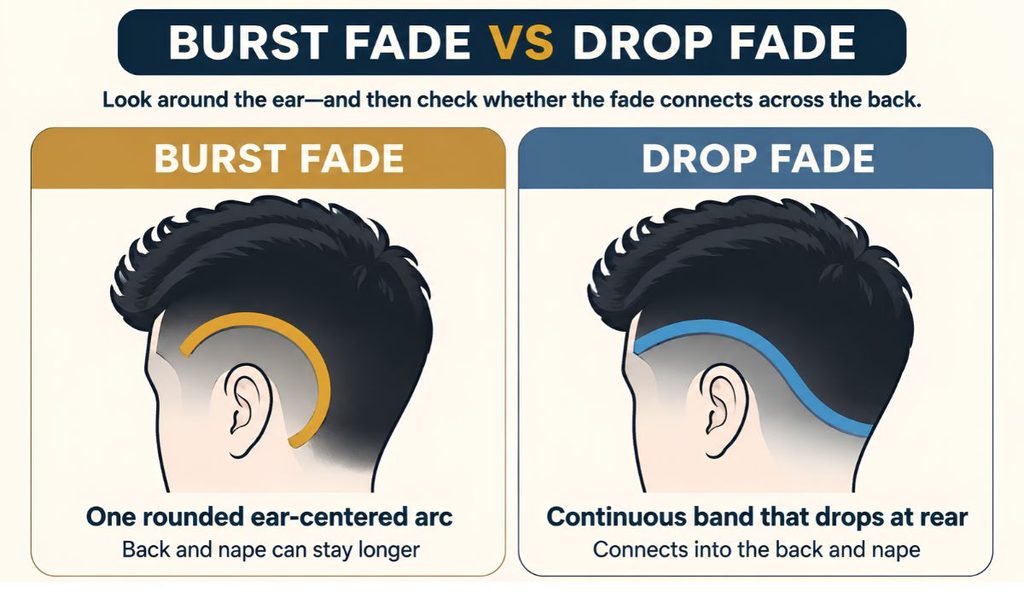
A drop fade curves down behind the ear and keeps going toward the nape. A burst stops that curve around the ear and lets the back stay long. That’s the whole difference in burst fade vs drop fade.
Here’s a quick way to compare:
- Burst fade: a half-moon around each ear, with a longer back
- Drop fade: one continuous arc that sinks behind the ear
- Taper fade: minimal shortening at the edges, very subtle
- Regular fade: an even blend all the way around
If you’re stuck on burst fade vs taper fade, ask yourself one thing. Do you want people to notice the shape? Pick the burst. Do you want it tidy and quiet? Pick the taper.
Burst Fade Placement: Side and Rear Views
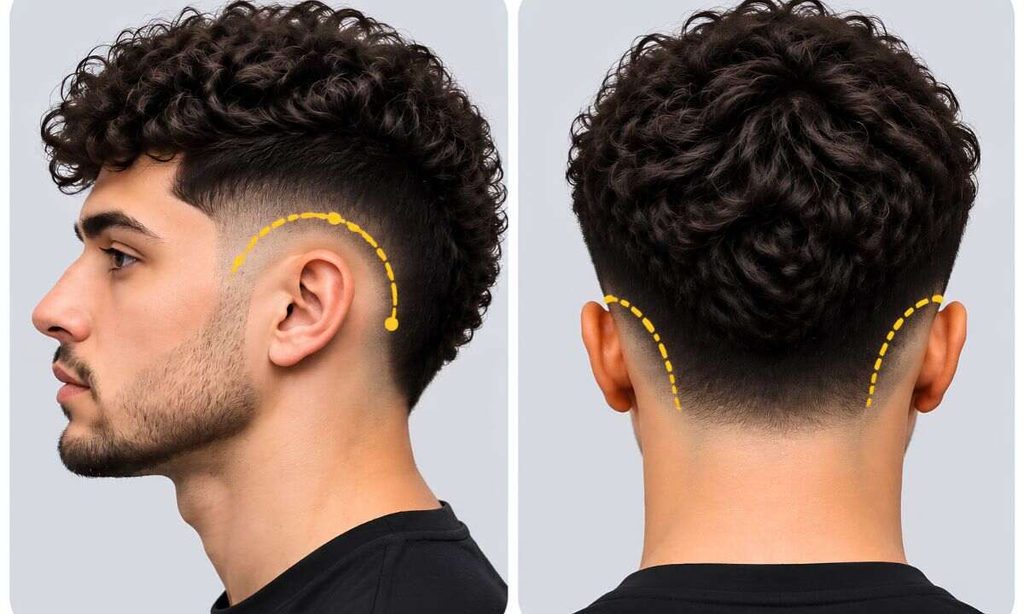
Burst fade placement creates a curved effect around the ears, gradually blending shorter hair into longer hair on the sides. From the side view, the fade follows a semi-circular shape that gives the haircut a clean and stylish appearance.
From the rear view, the fade curves around the back of the head while keeping the neckline neat. Ask your barber to blend both sides evenly for a balanced and professional burst fade look.
- Side View: The fade follows a curved shape around the ear
- Rear View: The hair blends smoothly around the back of the head
Types of Burst Fade: Low, Mid and Strong
These labels aren’t standardized, and one barber’s “low” is another’s “mid.” So treat them as a starting point and point at your head to show where the arc should peak. A quick photo beats three minutes of guessing.
A low burst fade keeps the arc tight and close to the ear. It leaves more weight on the sides and grows out softly. It’s the safest pick for a first try or a conservative office.
A mid burst fade peaks about halfway up the side, above the top of the ear. A high burst fade climbs toward the temple and removes the most hair. The higher you go, the louder the contrast and the sooner regrowth shows.
Quick guide to picking your height:
- Low: first-timers, fine hair, workplaces with a dress code
- Mid: most people, most tops, easy to explain
- High: curls or tall textured tops that balance the exposed sides
Shadow, Zero or Skin Burst Fade?
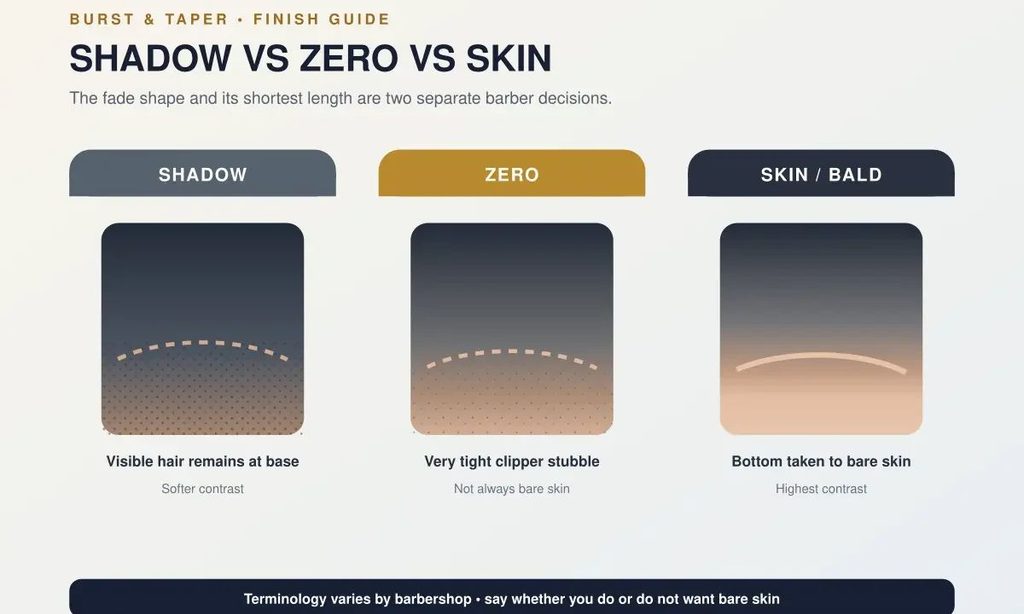
Height and finish are two separate choices. People mix them up and end up with a cut they didn’t plan. You can order a low skin burst or a higher shadow burst, and both are valid.
A shadow finish leaves visible short stubble at the base. It looks soft, and regrowth hides well. A zero finish goes very close with the clippers but isn’t bare skin. A skin finish uses a foil shaver or a bald blade at the lowest point. It’s the sharpest look, and it shows growth fastest.
Not sure which one fits? Ask for shadow first. You can always go tighter next visit, but you can’t put your hair back on a Tuesday afternoon.
Best Top Styles for Burst Fade Haircuts
Since the arc stays the same, the top does the talking. A burst fade with a textured top is the easiest place to start. A few inches of messy texture shows off the contrast without much effort.
Want something louder? Try a mullet, mohawk or faux hawk. Prefer something calm? A short crop works, and so does a slick back. Each one changes the whole mood of the same fade.
Here’s what pairs well:
- Mullet: the long back becomes the feature
- Faux hawk: curved sides push the eye toward a center ridge
- Curls and coils: volume on top balances the short sides
- Short crop: practical and easy to grow out
How Hair Texture Changes the Result
Your texture changes how the burst looks, so one reference photo can’t work for everybody. Burst fade with straight hair shows every line, so the blend needs to be smooth. Any weak spot will be visible.
Wavy hair softens the boundary between short and long. Curly and coily hair adds drama, since the top puffs out above the arc. For a burst fade haircut for thick hair, ask the barber to thin the bulk behind the arc so it sits flat.
Fine or low-density hair is where a high arc backfires. Too much exposed scalp can look harsh. A lower, softer arc usually flatters it better.
Burst Fade Clipper Guard Sizes
Here’s the part most guides skip. Burst fade clipper guard sizes depend on your brand, but the general ladder is simple. Barbers usually start the lowest zone with the blade open or a zero gap, then climb through short guards as the arc blends up.
Many barbers work with guards like #0.5, #1, #1.5 and #2, then move into #3 or #4 near the top of the blend. A #3 leaves about 3/8 of an inch, and a #4 leaves about 1/2 inch. Treat these as typical numbers, because tools and technique vary.
You don’t need to memorize any of it. Just know the language. “Shadow with a #1 guard at the bottom” tells your barber far more than “kind of short.”
Best Burst Fade for Face Shape
This table provides a quick visual reference, helping readers immediately match their face shape with the right haircut.
| Face Shape | Features | Goal | Best Haircuts Options |
| Square Face | Strong jawline, broad forehead, wide cheekbones | Soften sharp edges while maintaining structure | Textured crop, quiff, high fade, undercut, side part, pompadour |
| Heart Face | Wider forehead, narrow chin | Balance the forehead and enhance the jawline | Medium layers with texture, side-swept bangs, low fade with volume on top |
| Oval Face | Balanced proportions, slightly longer than wide | Showcase versatility while maintaining balance | Crew cut, textured crop, side part taper, undercut, pompadour |
| Round Face | Soft curves, equal width and height | Add height and angles to create length | High fade with textured top, pompadour, quiff, side part, faux hawk |
| Oblong / Rectangular Face | Longer face, narrow width | Create width to balance vertical length | Layered or medium-length styles, side part with texture, shoulder-length/shaggy styles |
The best burst fade for face shape comes down to balance. Round faces tend to look sharper with a mid or high arc and some height on top. It adds length and angles where you want them.
Square faces already have strong lines, so a low or mid burst softens things nicely. Long or oval faces usually do well with a low burst and a bit of side volume. A towering top on a long face just stretches it more.
These are guidelines, not laws. Your hairline, ear size and head shape matter too. Ask your barber to judge it on you, not on a model.
Burst Fade with a Beard
Does a burst fade with a beard work? Yes, and it often looks better than the cut alone. The trick is connecting the two without a hard gap above the sideburn.
Ask your barber to fade the beard into the burst near the ear. That way the curve flows into the facial hair instead of stopping dead. A skin burst with a trimmed beard gives a sharp, deliberate look.
If your beard is full, keep the cheek line clean. A messy line will fight with the crisp arc above it.
What to Tell Your Barber
The best way to learn how to ask a barber for a burst fade is to give three details in plain words. Say where the arc goes, how short it finishes, and what happens at the back. Then describe your top.
Try this: “I want a burst fade around the ear, mid height, shadow at the bottom. Keep the center back longer. Leave about three inches on top.” That’s clear, and it covers every decision.
Bring two photos, one from the side and one from behind. A front photo hides the two things that matter most. And if you’re unsure, say, “Show me the arc before you take it higher.”
Burst Fade Barber Instructions You Can Copy
Here are a few lines to keep on your phone. They work on how to get a burst fade haircut without a long chat.
- Subtle: “Low burst, shadow finish, keep the back.”
- Bold: “High skin burst, long mullet back, clean V at the nape.”
- Easy upkeep: “Mid burst, shadow, short tidy back.”
Want to be a good client? Tell the barber what you do for work, and how much styling time you have. That tiny detail helps them choose the right height.
Maintenance and Grow-Out
Let’s talk about burst fade haircut maintenance with real ranges. Many people book every two to three weeks for a skin burst, and three to four weeks for a shadow finish. Those are typical, not rules. Your hair speed matters.
To maintain a burst fade, keep the top moisturized and style it the same way each day. Sleep on a smooth pillowcase if you have curls. A clean edge-up between visits helps, too.
When it grows out, a low shadow burst fades into a normal short cut with almost no awkward phase. A high skin burst shows growth fastest. Plan the next visit when the arc stops looking crisp.
Cost and Time in the Chair
How long will it take? A burst usually takes longer than a basic cut, because blending a curve needs patience. Many barbers set aside 45 minutes to an hour, and a design or mullet can add more.
Price varies by city and shop, so ask before you sit down. Some shops charge extra for designs or detailed line work. A quick text asking about it saves surprises.
Share your own number in the comments. What did you pay and how long did it take? Other readers will thank you.
Common Burst Fade Mistakes
The biggest slip is the arc traveling too far into the back. It turns into a drop fade, and the mullet look disappears. Another is cutting too much nape length when you want a long back.
People also assume “skin” when they want a soft shadow finish. And with curls, the arc can end up too high once the hair dries and springs up. Ask the barber to judge the line on dry hair.
Quick checklist before you leave the chair:
- Check the side: does the arc curve around the ear?
- Check the back: is the center still long?
- Check the finish: is it shadow, zero or skin as ordered?
- Check one photo: does it match what you showed?
Burst Fade Styles: 15 Looks to Show Your Barber
A burst fade is a shape, not a fixed haircut. The same arc can sit under almost any top. Here are 15 popular burst fade haircuts, each with a line you can say out loud.
Save the ones you like and show them side by side. Barbers love a clear reference, and you’ll get closer to what you picture. Which one tempts you most? Tell us in the comments.
1. Classic Burst Fade
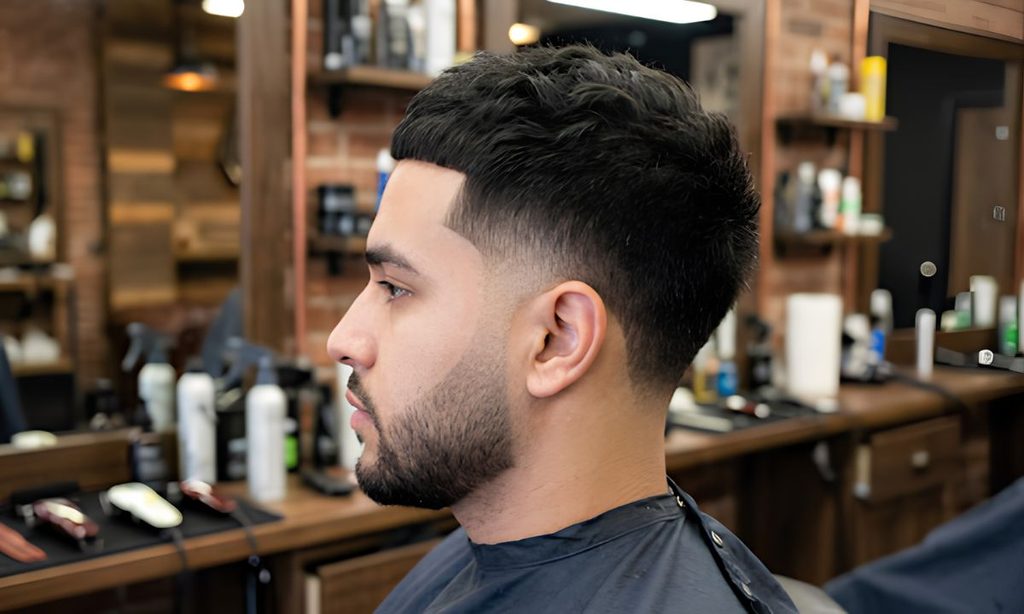
This is the everyday version, and the one to bring if you’ve never had a burst. It has a mid-height arc, a skin or shadow finish near the ear, and a textured top. The hair behind the arc stays longer.
It works in most places, and it grows out gracefully. It’s also a solid starting point for a modern burst fade haircut.
Say: “Burst around the ear, mid height, skin at the bottom, keep the back longer.”
2. The Burst Fade from the Back
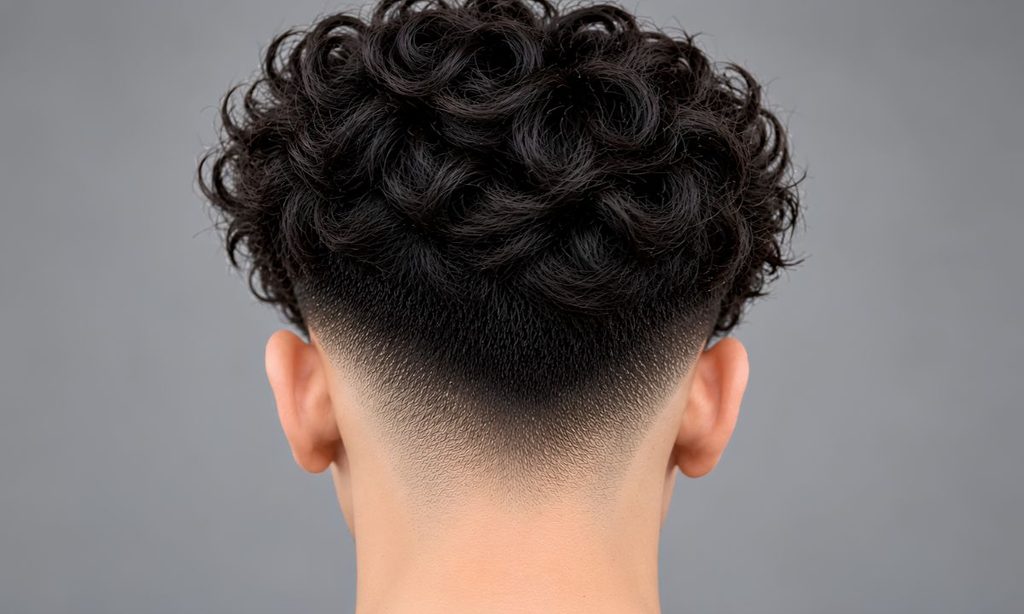
Most people forget to show this angle, and it’s the one that matters. In a true burst fade back view, you see two short half-moons by the ears and longer hair between them.
If a short band joins them across the nape, it’s no longer a burst. Ask the barber to show you the back with a hand mirror before you leave. That small check saves a lot of regret.
3. Low Burst Fade vs High Burst Fade
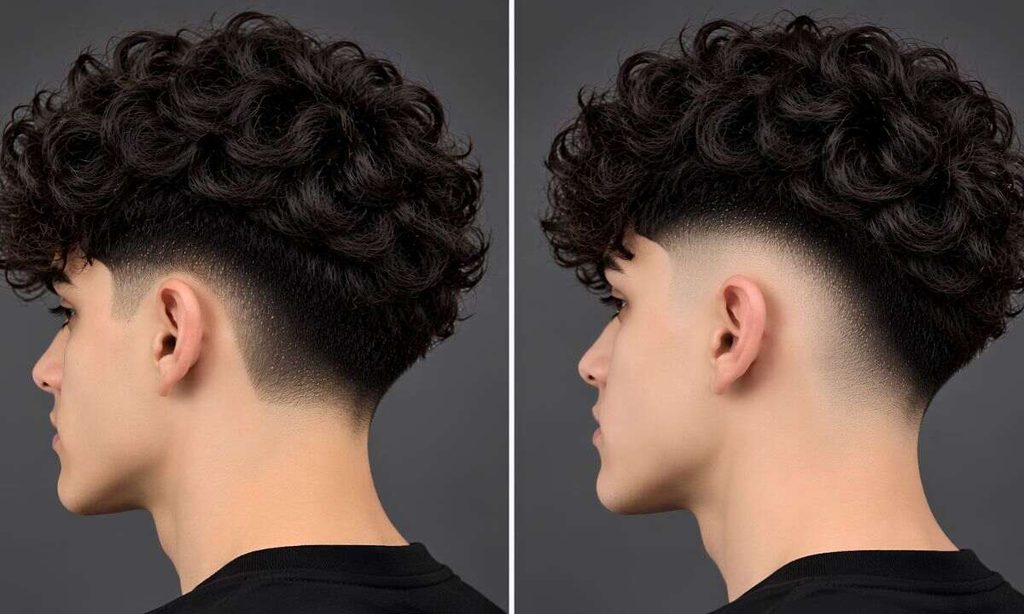
Height is the biggest choice after the shape itself. A low burst fade keeps a small arc near the ear and grows out softly. A high burst fade reaches toward the temple and removes far more hair.
Picture two friends. One works in an office and wants a quiet shape. The other plays in a band and wants drama. Same cut, two heights.
Choose low if you want subtle. Choose high if you want people to notice.
4. Mid Burst Fade
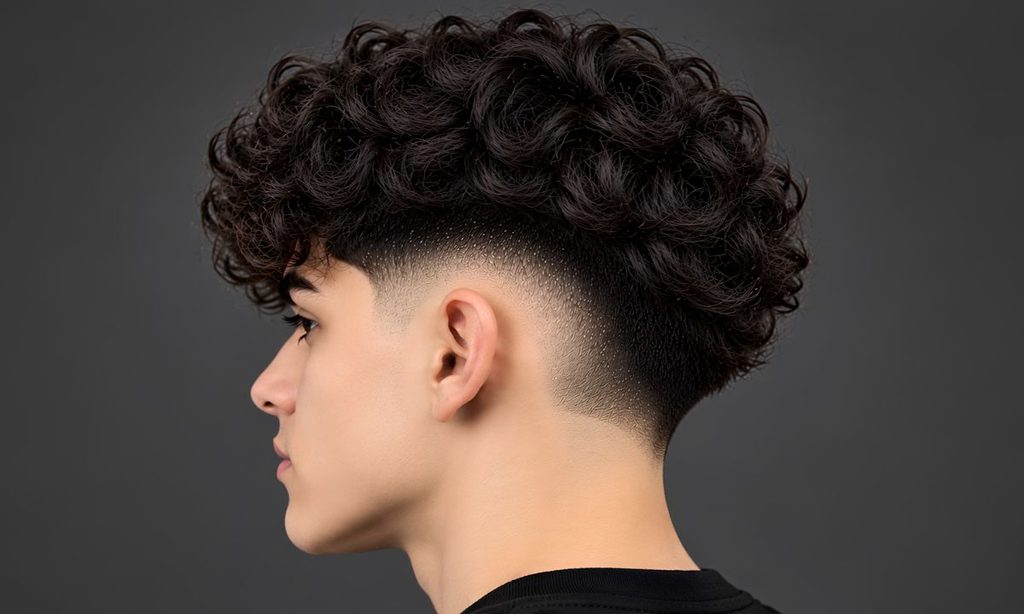
The mid burst fade is the middle ground. The arc peaks about halfway up the side, above the top of the ear. You can see it from across the room, yet it doesn’t expose as much scalp.
It suits crops, curls and mullets alike. If you can’t decide, this is the safest bet.
Say: “Mid burst, peaking halfway up the side, curved around the ear.”
Why Mid Fades Are So Popular
Mid fades are often considered the “perfect middle ground” because they:
- Create a modern appearance
- Add structure to the haircut
- Work in both professional and casual settings
- Pair with almost every hairstyle
- Enhance facial definition
Many clients at 18|8 Fine Men’s Salon – San Diego choose mid fades because they offer enough edge to feel stylish while remaining refined and wearable every day.
Best Hairstyles for Mid Fades
- Quiffs
- Textured crops
- Faux hawks
- Modern pompadours
- Curly hairstyles
- Short messy styles
5. High Burst Fade
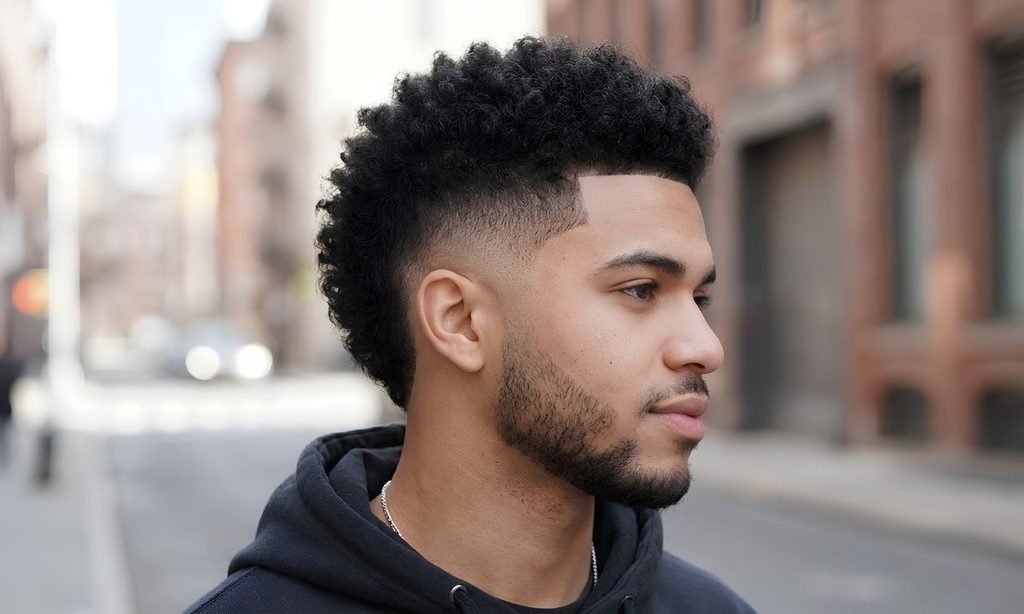
A high burst takes the arc up toward the temple. Most of the hair around the ear goes short, so the contrast is strong. It looks best under volume, like curls or a tall textured top.
The tradeoff is upkeep. Regrowth shows sooner, and it can feel harsh on fine or thinning hair. If that’s you, drop it one notch.
6. Burst Fade Curly Hair
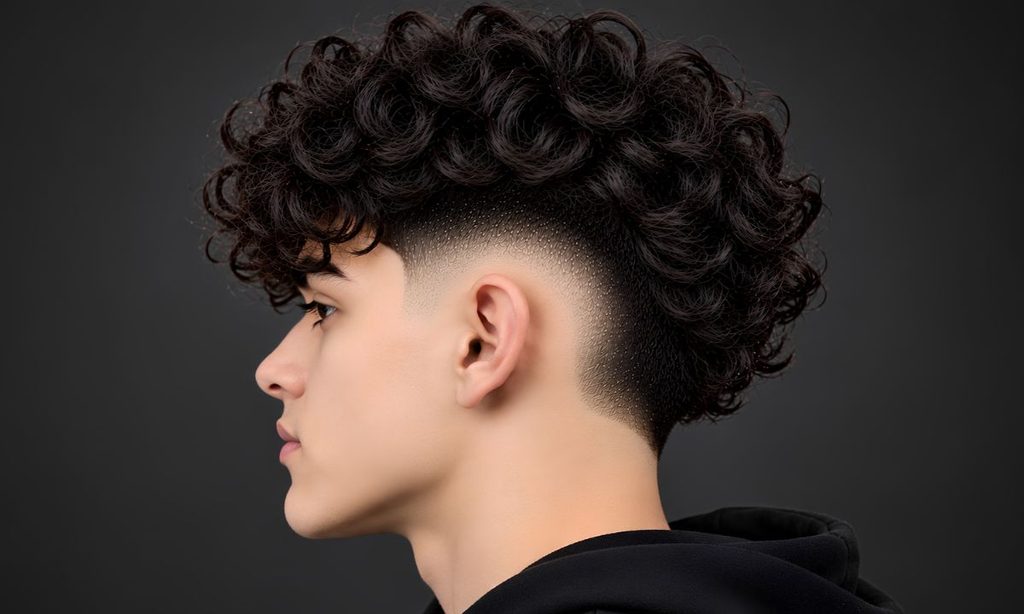
Here the focus is the top. Loose to medium curls over a burst look natural, because the curls spill out above the arc. Keep two to three inches so the curls can form.
Want a bit of burst fade with fringe? Leave the front longer and let the curls fall forward. It softens the face and balances the sharp sides.
Say: “Mid burst, keep my curls two to three inches, leave a little fringe.”
7. Burst Fade Mullet
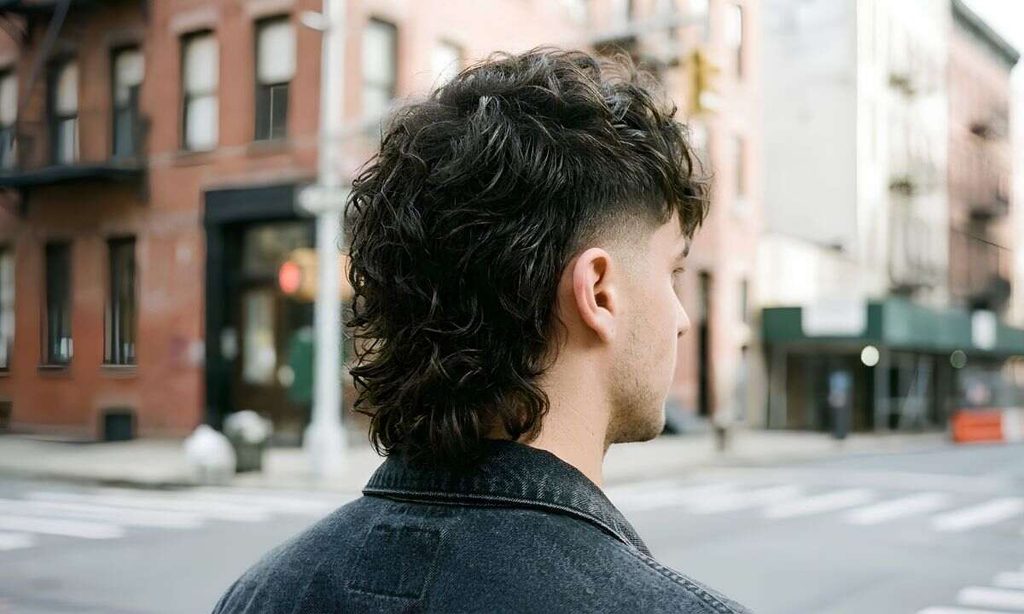
This is the most popular pairing, and it’s easy to see why. The burst opens up the sides while the back grows long. The two shapes work as a team.
Decide the back length before any clippers start. A mullet can’t be rebuilt in one visit, so be clear about how long the nape should stay.
Say: “Burst around the ears, keep the back long, clean the neckline.”
8. Burst Fade Mohawk
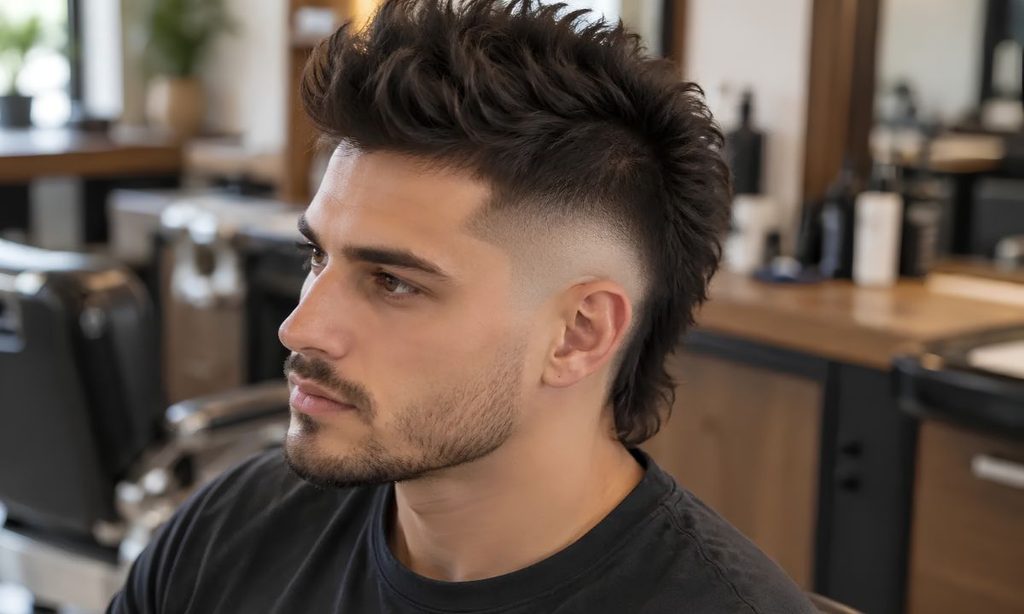
A burst fade mohawk keeps a strip of longer hair from the front hairline to the nape. The sides burst around the ears, and some hair stays above and behind the arc. That makes it bold but not extreme.
Agree on the strip width first. Many people choose two to four inches. It’s a big visual choice, so settle it before cutting.
9. Burst Fade with a Design
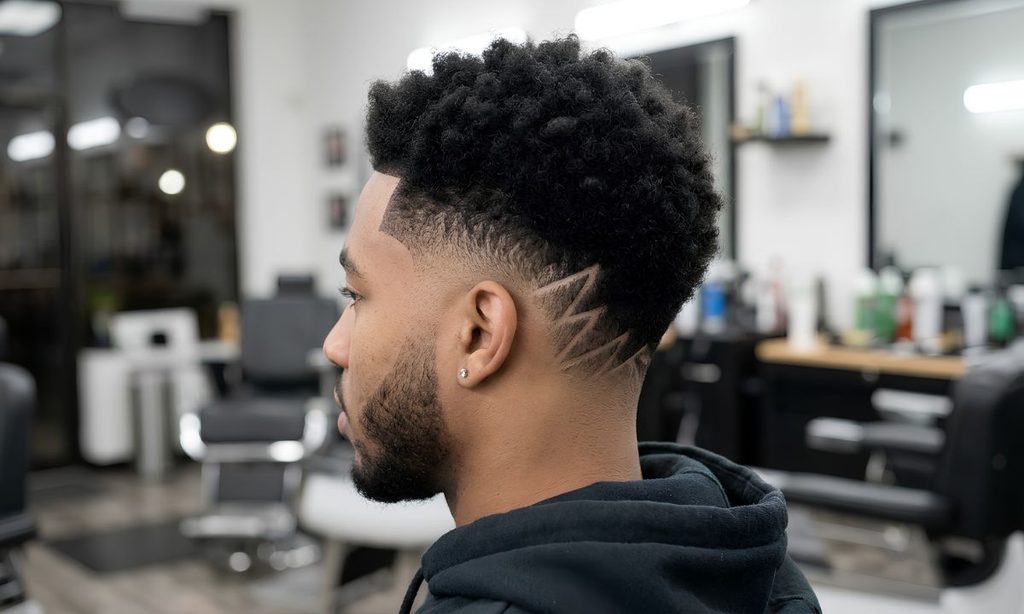
A burst fade with a design adds a thin line or simple pattern into the faded area. Many people follow the curve of the arc. Simple lines look cleanest and are easiest to refresh.
Detailed burst fade with hair design work needs a barber who specializes in it. Expect designs to soften within a week or two as hair grows back.
Say: “One thin line following the burst, from the temple to behind the ear.”
10. Burst Fade with a V at the Back
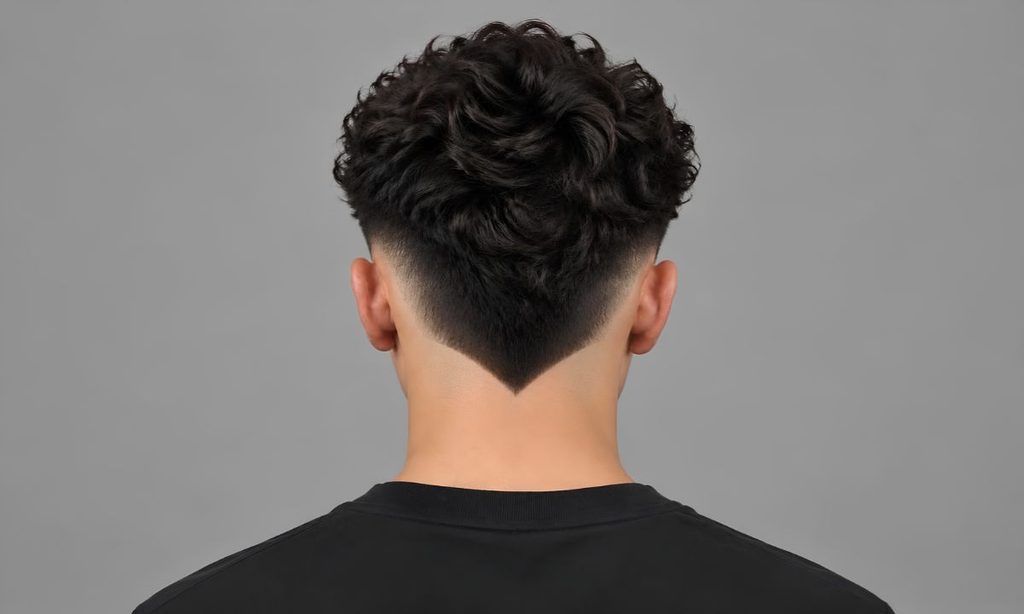
This cut shapes the neckline into a point at the center of the nape. It makes longer hair look deliberate instead of grown out. That’s why it’s popular with mullets.
A burst fade with V shape needs a steady hand. Ask for the V to be shaped at the nape while the center keeps its length. Check it in the mirror, since a crooked V is hard to hide.
11. Burst Fade on Curly Hair
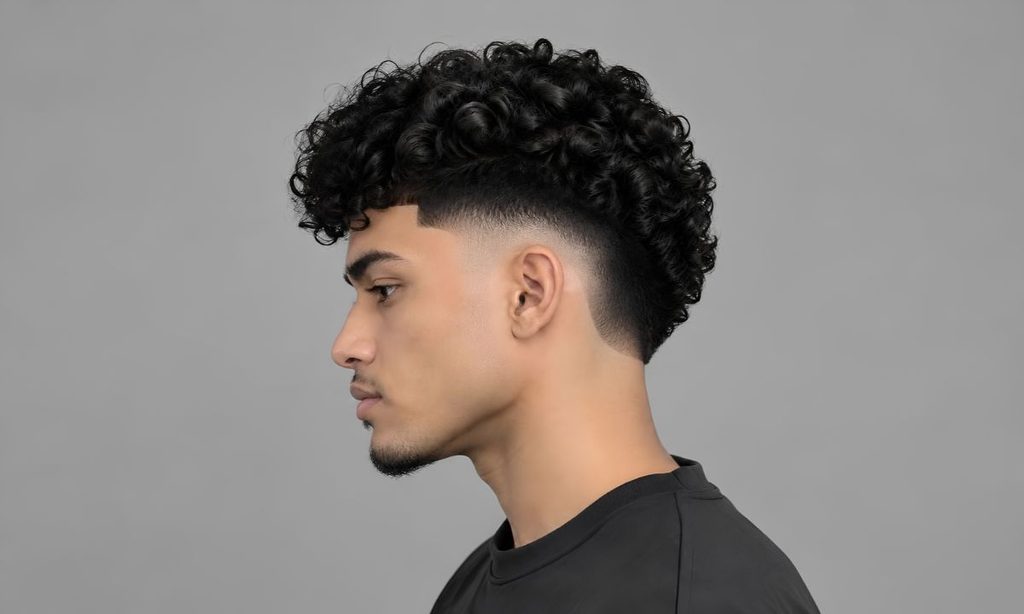
This one is about tighter textures. A burst fade with afro, twists or braids needs care, because the arc has to sit lower than you think. Curls shrink as they dry, and the line can look higher later.
Ask the barber to cut your hair in its natural dry shape. For burst fade with twists or burst fade with braids, keep the length on top and let the burst clean up the sides.
This is also one of the best burst fade styles for curly hair. The volume on top makes the contrast pop.
12. Burst Fade with a Buzz Cut
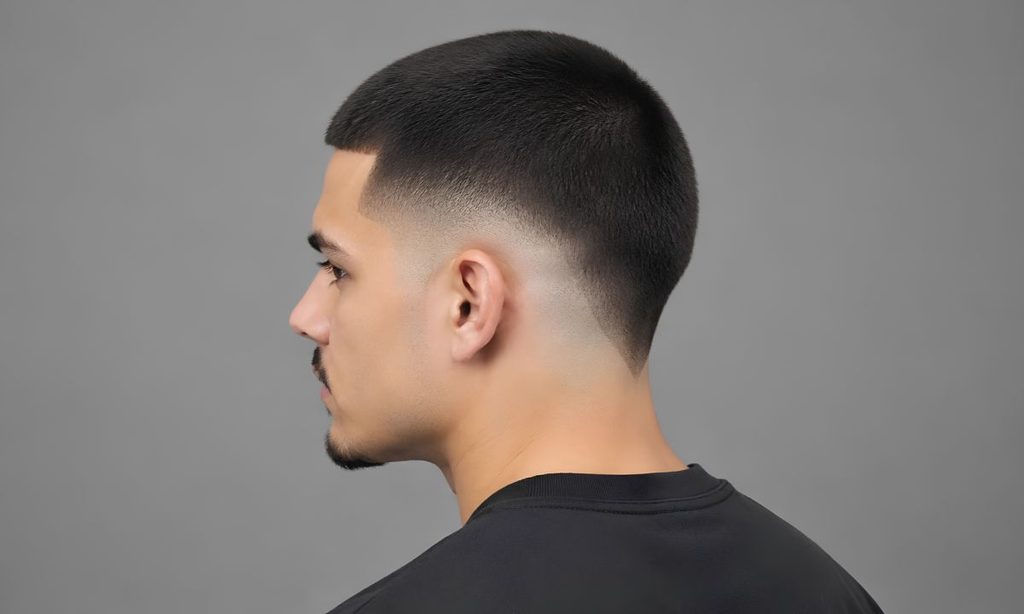
This is the lowest-maintenance top. The hair is clipped to one short length, often a #3 or #4. The arc around the ear gives it shape, so you don’t need to style anything.
That said, the burst needs regular touch-ups to stay sharp. If you like a burst fade with short hair, book often. A buzz cut hides nothing, so fresh edges matter.
13. Burst Fade with Waves
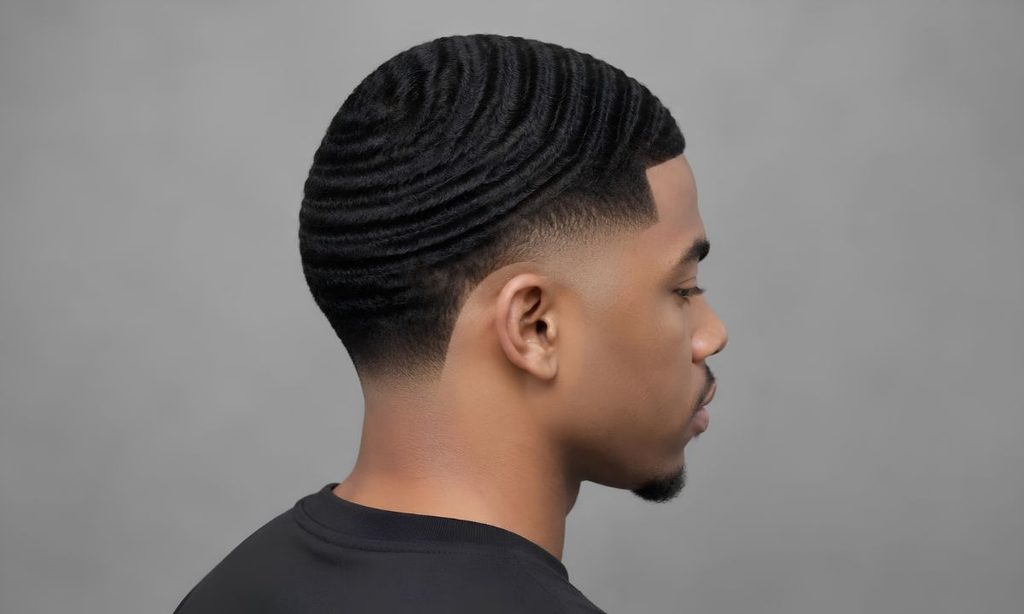
On coily hair, a short brushed top with 360 waves can pair well with a burst and a lineup. The waves sit on the top and back, while the burst cleans up the ear area. The two textures contrast nicely.
Ask the barber to keep the lineup on your natural hairline. Brush often to keep the pattern sharp. This is a strong pick if you want a burst fade with waves that stays crisp.
14. Burst Fade Taper
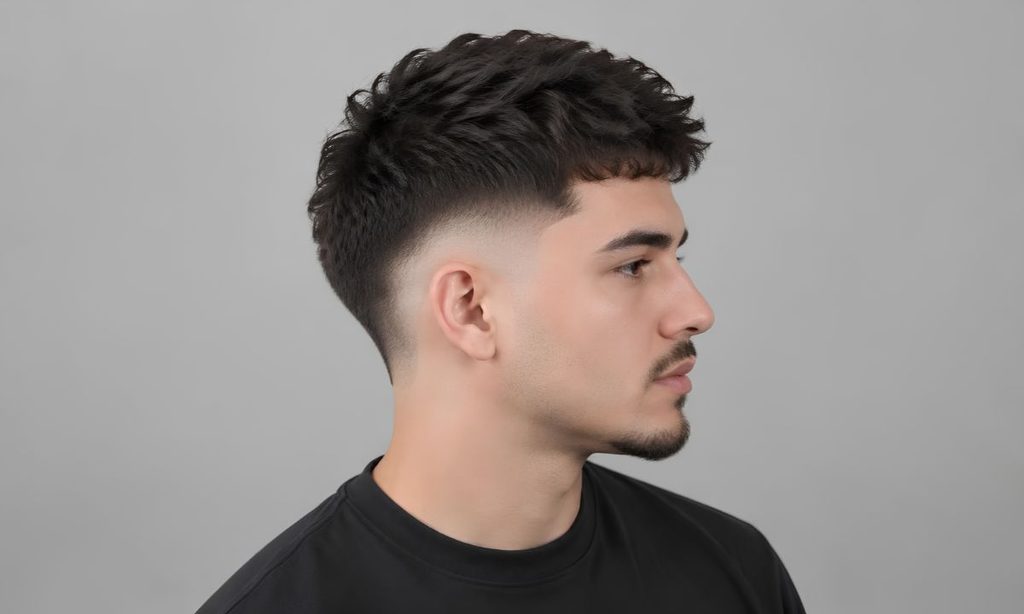
This one blends the ideas. A burst fade taper uses the burst around the ear, then tapers the neckline and sideburns gently. The result is sharp without feeling loud.
It’s a good middle path if you’re torn between a taper and a burst. It also grows out neatly. Ask for a clean neckline and soft sideburns.
Say: “Low burst around the ear, taper the neckline, keep the top textured.”
15. Burst Fade Long
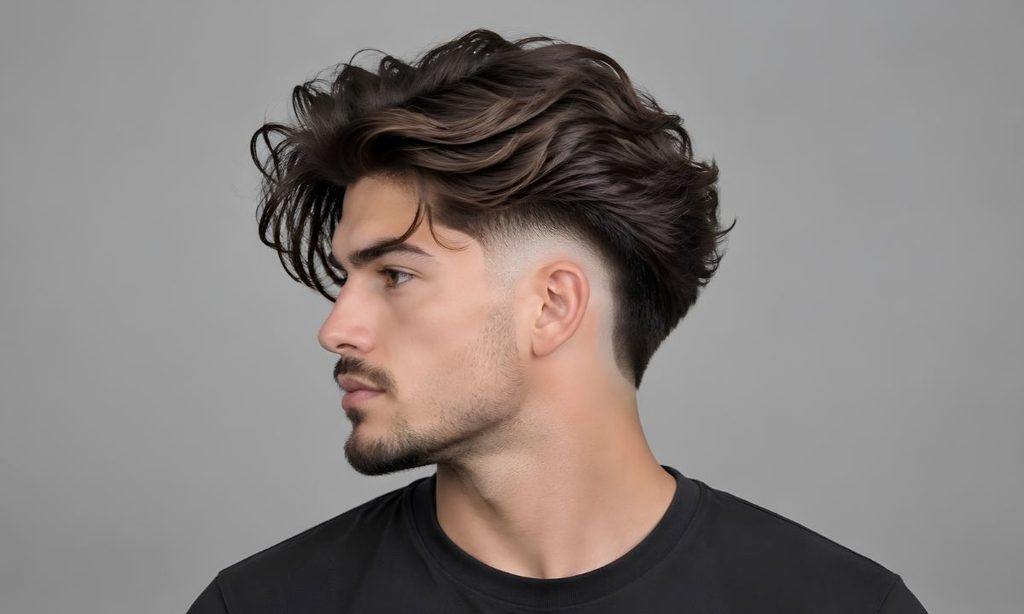
Yes, a burst works with length. A burst fade with long hair keeps the top and back flowing while the ear area stays short. It’s a good way to look tidy without losing your hair.
Straight or wavy long hair shows the contrast beautifully. Use a light cream to control flyaways. Ask for a soft blend so the transition doesn’t look harsh.
Bonus: Burst Fade with a Slick Back
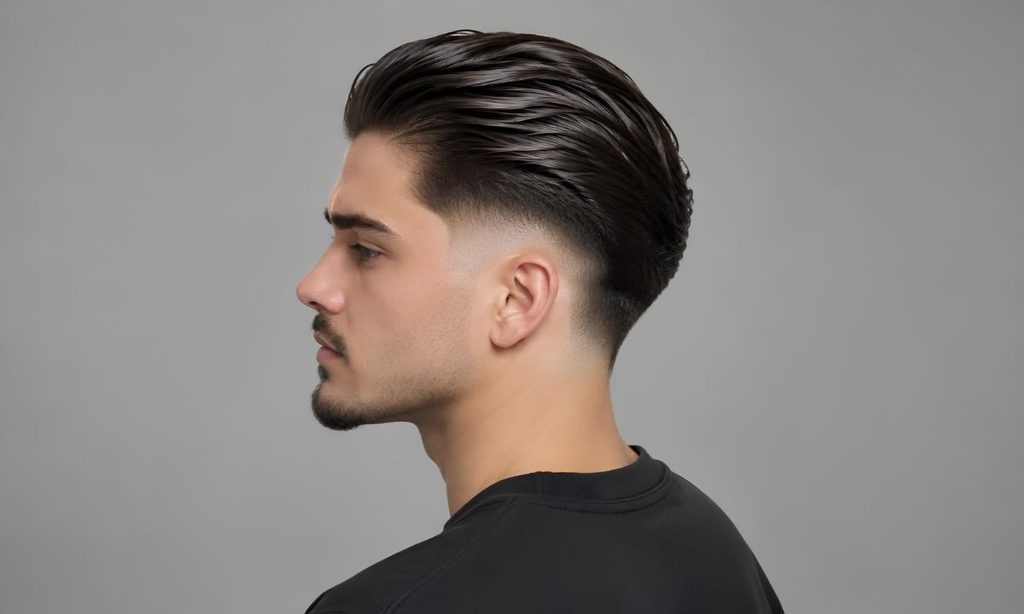
A burst also works under longer straight hair combed back with pomade or cream. The arc keeps the sides neat while the length flows back. It’s a clean look for events or work.
Straight hair shows every line, so ask for a soft blend. A little product goes a long way. Don’t overdo the shine.
Trendy Burst Fade Hairstyles for 2026
The trendy burst fade hairstyles for 2026 lean toward texture and personality. Mullets and curls with a burst remain popular, and lower, softer arcs are showing up in offices. People want a shape that feels intentional, not extreme.
Expect more natural edges, shadow finishes and real texture on top. Heavy designs are less common, while simple lines still catch eyes. Trends shift, though, so pick what suits your hair and your life.
Seen a look you love this year? Drop it in the comments and tell us what you’d change.
How Often Should You Get a Fade Haircut?
Hair growth speed varies, but general maintenance timelines include:
Low Fades
Every 3–4 weeks
Mid Fades
Every 2–4 weeks
High Fades and Skin Fades
Every 1–2 weeks for maximum sharpness
Consistent appointments help preserve:
- Blending
- Hairline sharpness
- Neckline cleanliness
- Overall structure
Men who prioritize polished grooming often schedule recurring appointments to maintain consistency year-round.
Is a Burst Fade Professional?
It depends on the version. A low or mid burst with a shadow finish and a tidy back looks neat in most workplaces. A high skin burst with a long mullet back or a shaved design is more of a statement.
If your job has a dress code, check it first. If you want the shape with less contrast, a taper is the more conservative choice. Ask a coworker or manager if you’re unsure. It’s quicker than guessing.
Also read meaning on Hairdaydiary.com
Can You Have a Burst Fade in the Military?
Usually not in its popular forms. US Army grooming rules, found in AR 670-1, call for a neat, tapered appearance. They say extreme or faddish cuts aren’t allowed and name the mohawk as an example. Designs cut into the hair are also off the table.
That rules out mullet bursts, burst mohawks and designs. A very short, conservative burst with a tapered neckline sits in a gray area. Check with your chain of command before booking, because rules get updated and other branches and countries have their own.
Always read the current regulation, not a summary. Link the version you checked and note the date. Policies change, and a quick look can save you a bad haircut.
Frequently Asked Questions
What is a burst fade haircut?
It’s a fade that curves around the ear in a half-moon shape. The hair behind the arc stays longer. The top can be any style.
Is a burst fade the same as a drop fade?
No. A drop fade keeps curving down behind the ear toward the nape. A burst stops around the ear and leaves the center back longer.
How often do I need a touch-up?
Many people go every two to three weeks for skin and three to four for shadow. It depends on how fast your hair grows and how sharp you want it.
Does a burst fade work for thick hair?
Yes. Ask the barber to thin the bulk behind the arc so it lies flat. A mid arc often works well.
Can I get a burst fade with a beard?
Yes. Ask for the beard to fade into the burst near the ear. That keeps the curve smooth.
Is a burst fade okay for thinning hair?
A low burst is usually kinder, because it keeps weight near the temples. Avoid very high arcs if you’re worried about exposure.
Conclusion
A burst fade haircut is a shape you can tailor. Pick the arc height, choose your finish, decide what happens at the back, then match it to a top that suits your hair. That’s all it takes.
Bring two clear photos, use the lines in this guide, and speak up before the clippers rise. Most bad cuts come from vague requests, not bad barbers.
