
You asked for a “zero” and walked out looking bald. Or you asked for something softer and got a blurry mess.
Sound familiar? You’re not alone.
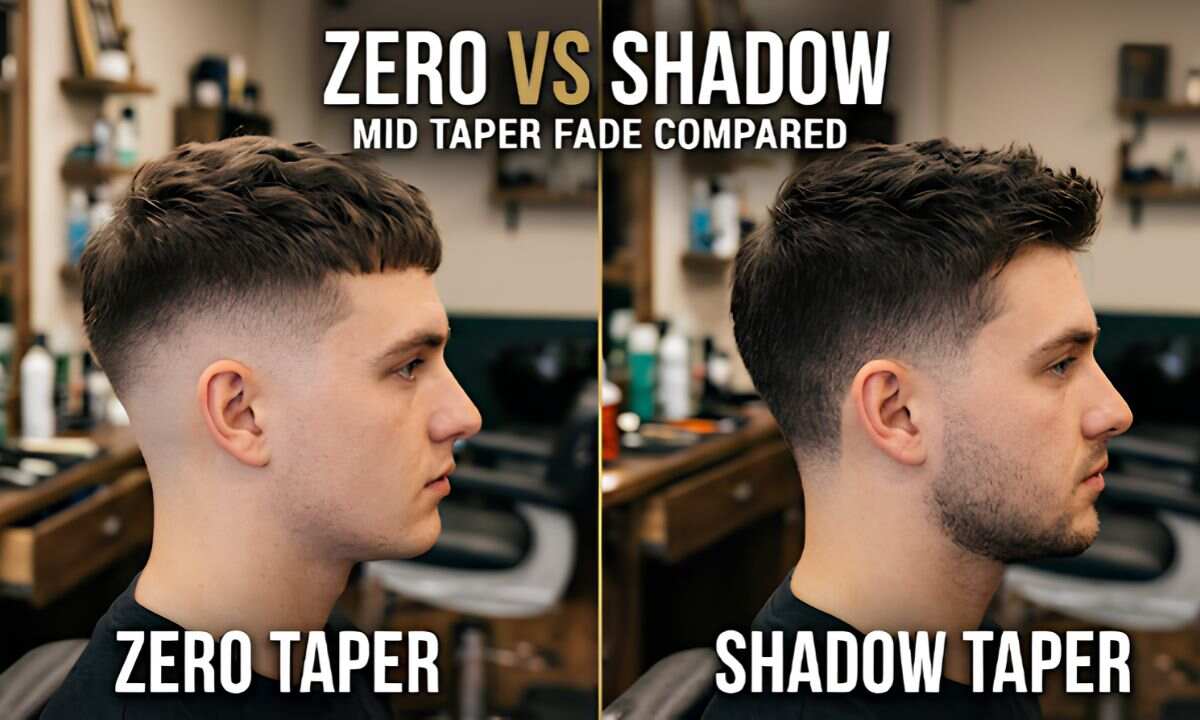
Here’s the short answer. A zero mid taper fade finishes the very bottom with a clipper at no guard, so you see crisp, short stubble at the temple and nape.
A shadow mid taper fade stops a little longer, so the edge looks like a soft dark haze.
Pick zero if you want contrast and a sharp outline. Pick shadow if you want a gentler look and a calmer grow-out.
Both keep weight on the sides, so neither one is a full bald fade.
The rest of this guide shows you how each cut looks, how to ask for it, and how long it lasts. Grab a coffee and read on.
Zero Mid Taper: Side, Nape and Retained Weight
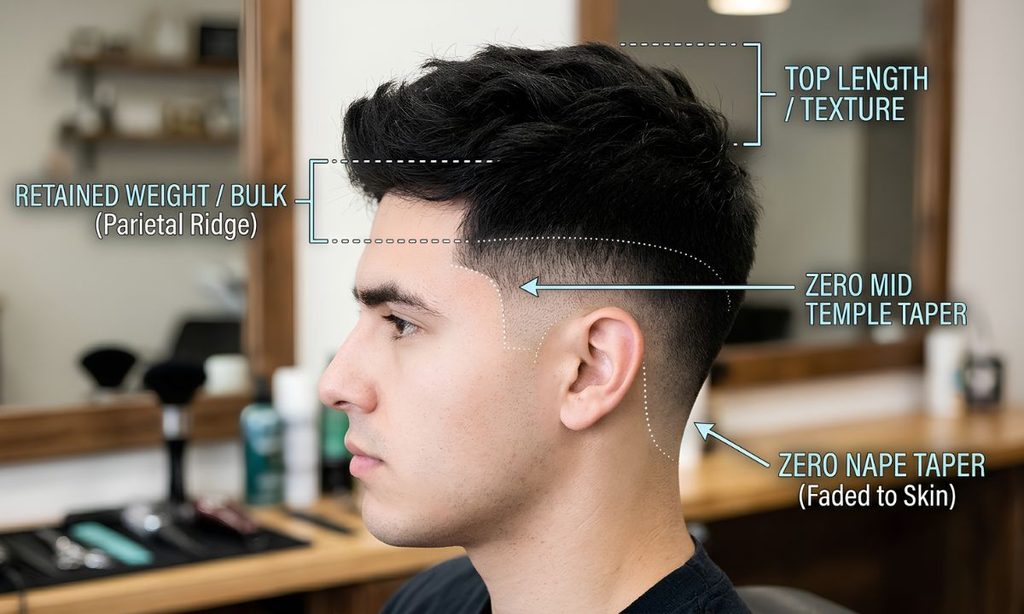
A zero mid taper fade only touches the edges of your head. The temple, the sideburn and the nape get the tight clipper work.
Everything between those spots keeps its length.
That leftover length is called retained weight. It’s the darker, denser hair that separates a taper from a full fade.
Look at the zero taper fade side view and you’ll see short stubble at the base, then a quick climb back to normal length.
The zero mid taper fade back view tells the same story. The nape gets a small, compact blend instead of a wide shaved patch.
That’s why a taper looks tidy without screaming “fresh cut” for three weeks.
Here’s a quick example. Say you work in an office and hate looking too sharp on day one.
A mid taper with zero fade at the edges gives you a neat outline while the sides still look like hair.
Zero vs Skin vs Shadow: The Difference
These three finishes get mixed up all the time. The gap between them is small in millimeters but big in looks.
Here’s the simple version.
| Finish | Approx. length at the bottom | What you see | Grow-out |
|---|---|---|---|
| Skin taper fade | 0 mm, shaved | Bare scalp, highest contrast | Shows regrowth in a few days |
| Zero taper fade | About 0.5 to 1 mm | Very short stubble, crisp edge | Sharp for about a week |
| Shadow taper haircut | About 1 to 2 mm | Soft dark haze, no hard edge | Blends in as it grows |
Those numbers shift with the clipper brand, the blade and how the barber sets the lever. Treat them as a rough map, not a ruler.
Photos beat numbers every time.
So how do zero fade vs shadow fade compare in real life? Zero looks cleaner from a distance.
Shadow looks more natural up close, and it hides small mistakes better.
Want the full difference between zero fade and shadow fade in one line? Zero is a clipper cut with a visible edge, and shadow is the same idea with a softer landing.
The skin fade vs zero fade question comes down to whether you want any hair at the bottom at all.
Compare Your Preferences First
Before you pick a finish, ask yourself three things. How much contrast do you like, how often will you visit a barber, and how does your hair grow?
Your honest answers matter more than any trend.
Here’s a quick checklist:
- Contrast lover: you like a sharp line and don’t mind frequent visits. Zero or skin fits you.
- Low effort: you want a cut that still looks fine after three weeks. Shadow fits you.
- Sensitive skin: you get bumps after shaving. Shadow or a standard zero is safer than skin.
- Fast hair growth: you’ll see stubble quickly, so a softer finish hides it longer.
Think about your face and hairline too. A strong, clear forehead handles a crisp zero taper fade with line up very well.
A soft or receding hairline often looks better with a shadow fade with natural hairline.
Not sure yet? Take a screenshot of two styles and show both to your barber. Ten seconds of pointing saves a month of regret.
What Does “Zero” Mean on a Taper?
In most shops, zero means a clipper with no guard attached. The blade cuts very close but doesn’t shave.
You’ll hear it called clipper zero guard fade or a zero guard taper haircut.
Some barbers also use “zero” for a zero-gapped blade. That’s a clipper blade adjusted so the teeth sit almost flush.
This gets much closer to the skin, so it looks nearly bald from a few feet away.
This is where mix-ups happen. A guy asks for a zero and expects stubble. The barber hears “zero-gapped” and takes it almost to skin.
So always add one extra line: “I want a little stubble, not bare skin.”
You might also see it written as “0,” as in a “0 taper” or “mid taper 0.” It’s the same request.
The zero taper haircut for men is just a taper where the shortest part is cut with no guard.
Zero Mid Fade Straight Hair
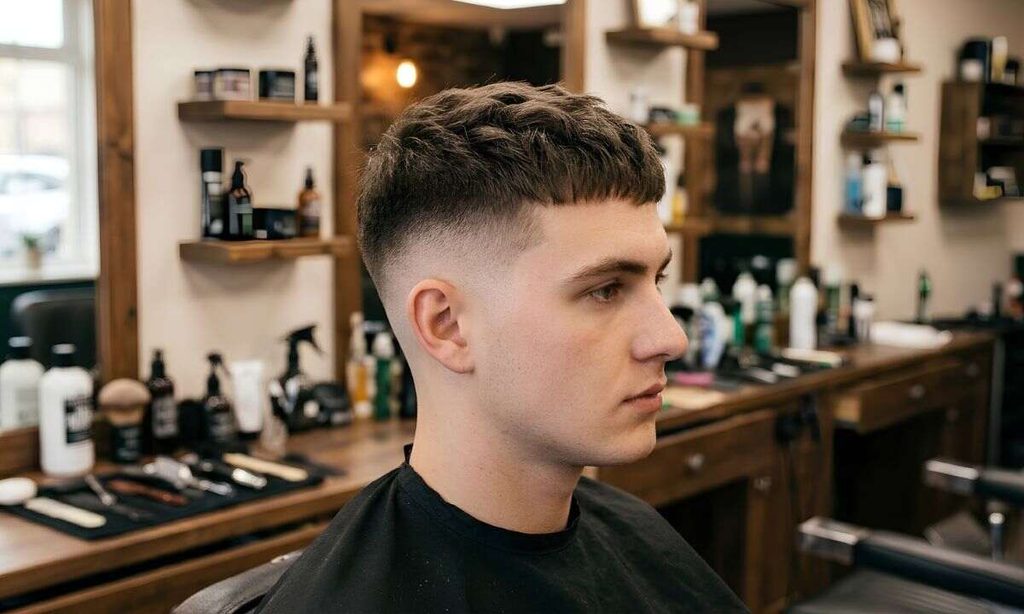
Straight hair shows every line. That makes a zero mid fade haircut look very clean, but it also exposes mistakes.
A patchy blend jumps out on straight strands.
Here’s what works well. Keep the top about three to five centimeters, then add a side part or a textured crop.
A shadow taper for straight hair is a good softer option if the zero feels too stark.
One tip for fine straight hair. Don’t ask for the fade to climb too high, because thin hair loses density fast.
A mid taper fade keeps more weight on the sides, which makes the top look fuller.
Example: picture a classic side part with a crisp zero edge and a little matte clay on top. It reads sharp and professional.
Swap the zero for shadow and the same style turns relaxed and casual.
Zero High Fade
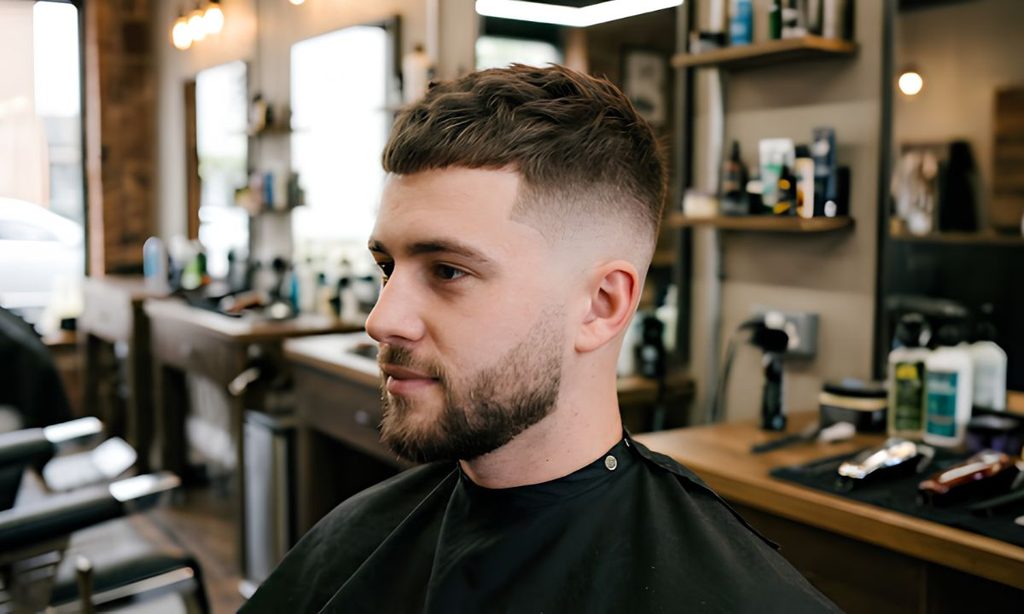
A zero high fade starts the blend up near the top of the head. The sides get short much earlier than a mid cut.
The look is bold, clean and very high contrast.
This is not the same as a taper. A high fade removes length across most of the sides and back.
A high shadow taper fade keeps a bit more hair and feels softer.
Who wears it well? Guys with a strong head shape, a defined jawline, and thick hair on top.
If your head has bumps or a flat spot, a high fade will show them, so ask your barber first.
The trade-off is upkeep. A high fade grows out into a shapeless dome within two weeks.
If you hate frequent visits, stay at mid height.
Zero Mid Fade Curly Hair
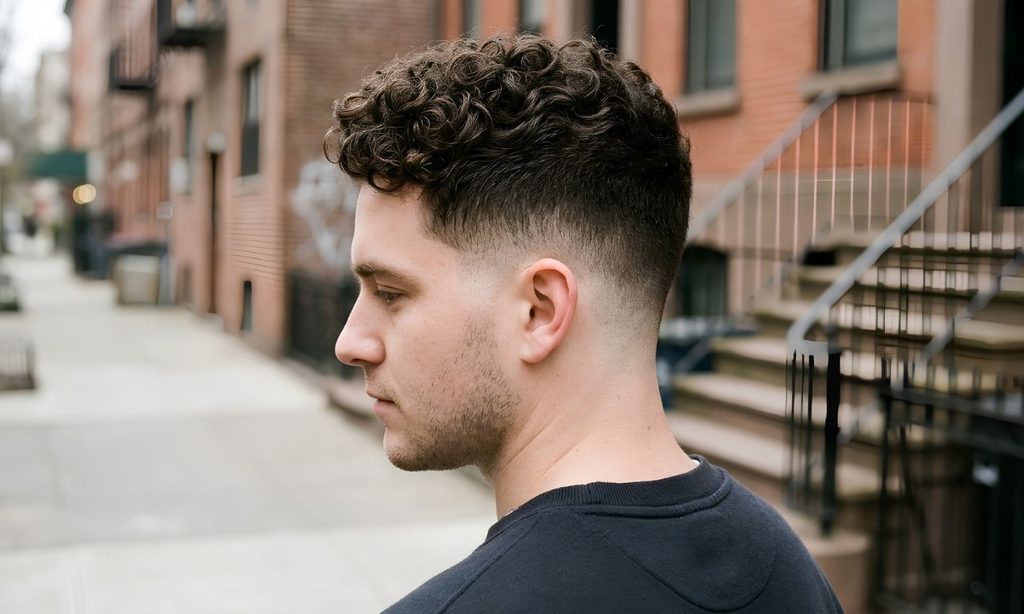
Curls and a zero finish pair up nicely. The tight sides make the curls on top look defined and intentional.
That’s why a zero mid taper with curly hair is so popular.
There’s one rule here. Have the barber cut curls dry, or at least check the length dry.
Curls shrink when they dry, so a cut that looks perfectly wet can end up shorter than you wanted.
A shadow taper with curly hair works well if your curls are loose or wavy. The softer edge keeps the sides from looking cut off from the top.
If your curls are tight, a crisp zero edge frames them better.
Try this the next time you go. Ask the barber to leave a bit of weight at the sides so the curls don’t stick out like a mushroom.
A small amount of retained length fixes that in seconds.
Low Fade Haircut
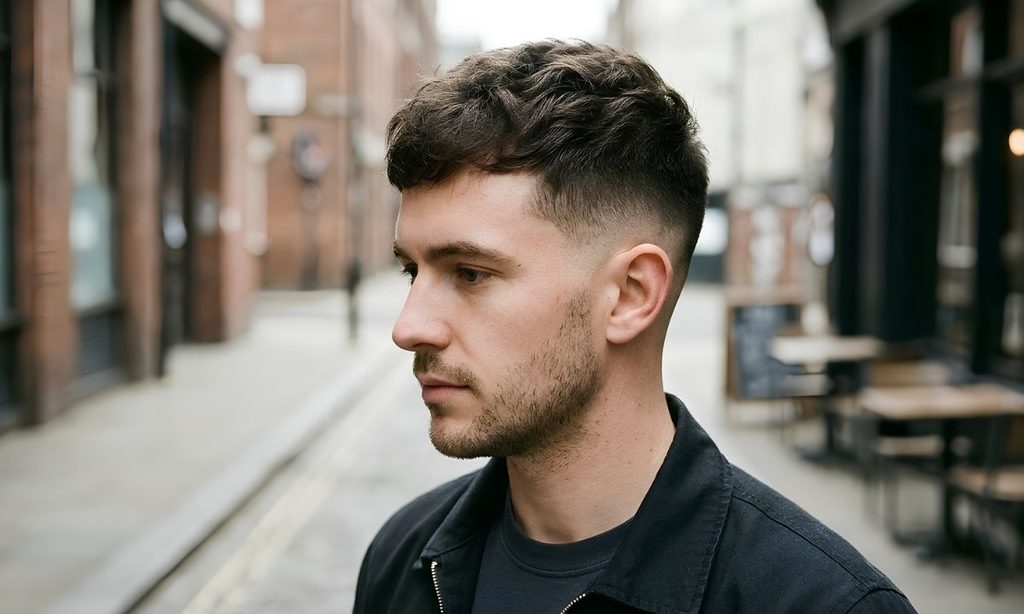
A low fade haircut starts the blend just above the ear and follows the neckline. It’s the most subtle option of the three heights.
People often pick it for work, weddings and first-time fades.
Pair a low fade with a low shadow taper fade for the softest result possible. Pair it with a zero finish if you still want a crisp outline.
Either way, the cut stays neat without drawing attention.
Here’s how heights compare in plain words:
- Low: the blend sits around the ear. Subtle and easy.
- Mid: the blend sits around the temple. Balanced and flexible.
- High: the blend sits above the temple. Bold and sharp.
Not sure where to land? Start low. You can always go higher next time, but you can’t add hair back.
Zero Mid Taper vs Zero Mid Fade
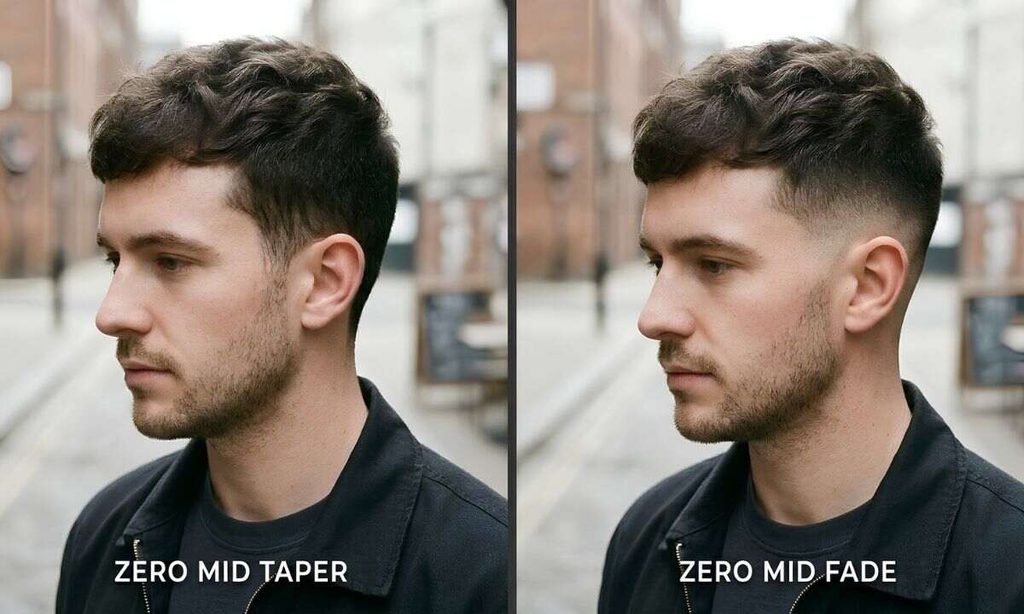
These two sound almost identical. They’re not.
One leaves weight on the sides, and the other takes it away.
A zero mid taper puts the zero only at the temples and the nape. A zero mid fade takes the zero all the way around the head at mid height.
The fade shows more scalp, and the taper keeps more hair.
Here’s what to say for each:
- Taper: “Zero at the temples and nape only. Keep the length on the sides.”
- Fade: “Zero all the way around at mid height.”
The zero fade vs taper fade debate is mostly about weight. If you want a gentle, grow-out friendly cut, go taper.
If you want a loud, high-contrast look, go fade.
The same logic applies to shadow fade vs taper fade. A shadow fade wraps around the head softly, and a shadow taper stays at the edges.
The line between them is blurry, so use a photo.
What Makes It a Mid Taper?
A taper is the lighter cousin of a fade. It trims the sides and neckline but leaves most of the length in place.
That’s why you can wear one with almost any top.
On a mid taper fade haircut, the temple and sideburn blend sit higher than on a low taper. The neckline is also cleaned and blended.
You’ll see the shortest hair near the ear, then a smooth climb to full length.
Here’s a simple test. If the short stubble runs through most of the sides and back, you’ve moved toward a fade.
If it stays near the edges, you’ve got a taper.
Barbers don’t always agree on the exact line. Some call a wide taper a “fade,” and some call a short fade a “taper.”
That’s fine. Just describe how much hair you want left on the sides.
Also read meaning on Hairdaydiary
Who Should Choose Zero Instead of Shadow?
Choose zero if you love a crisp perimeter. It gives your cut a sharp frame and makes the top pop.
It also looks great with a beard, because the stubble blends into the facial hair.
Choose a shadow if you prefer something natural. A natural shadow taper fade looks polished without looking fresh from the shop.
It’s the safer pick for sensitive skin, a busy schedule or a first fade.
Here’s a quick way to decide:
- Zero: you want contrast, you visit every one to two weeks, and you like a clean outline.
- Shadow: you want softness, you stretch visits to three weeks, and you hate harsh lines.
One more thing to think about. A clean zero taper fade shows every flaw in your hairline and head shape.
Shadow forgives a lot more.
Zero Taper Fade for Black Men
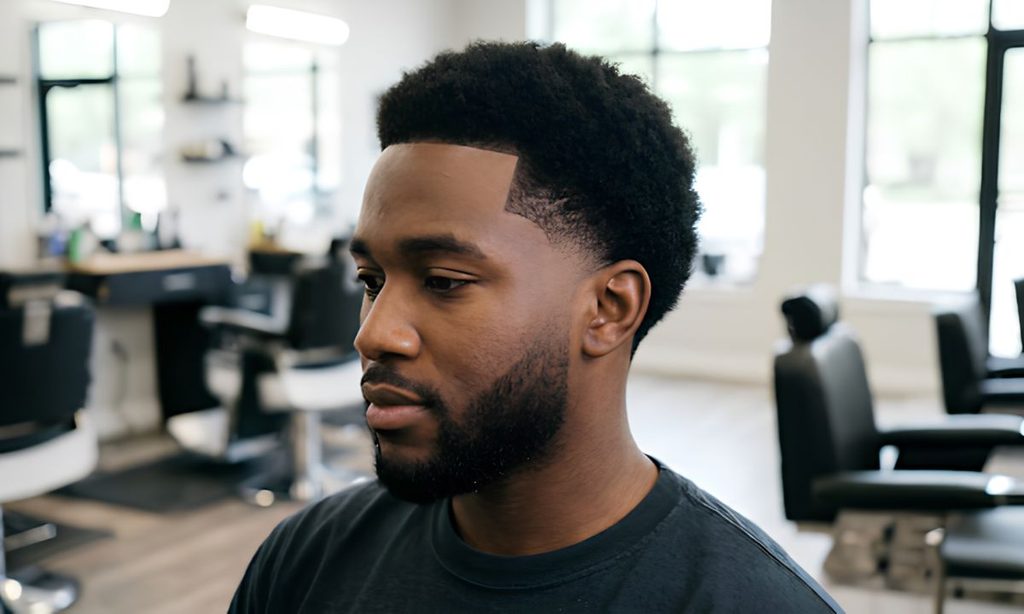
A zero taper fade for black men is one of the most requested cuts in the shop. It gives a sharp edge to dense, coily hair and holds a clean line.
It pairs well with twists, a high-top or a short crop.
A shadow taper for black men is a solid choice when the skin is prone to bumps. The softer finish cuts the risk of razor irritation.
If you get bumps, tell the barber before they touch a foil shaver.
Waves need a bit of planning. A zero taper fade with waves lets the wave pattern show without distraction.
Brush daily and keep the top at a length that lets the pattern flow.
Coily hair also benefits from a clean line up. A sharp edge at the forehead and temples frames the face and makes the whole cut look deliberate.
Zero Taper Fade With Line Up
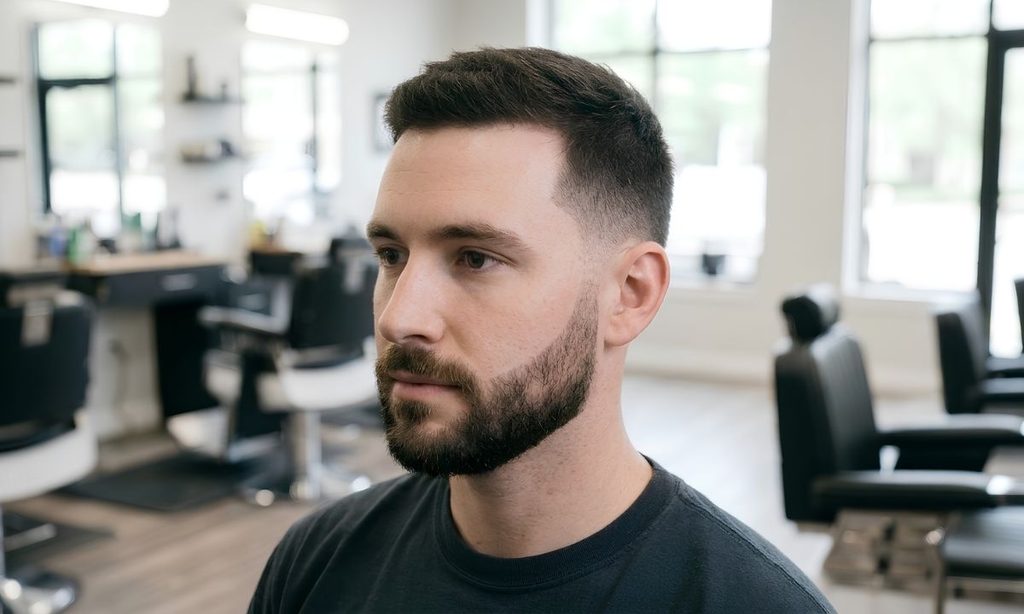
A zero taper fade with line up is the sharpest look on this list. The barber cuts a clean edge on the forehead, temples and sideburns.
It pairs perfectly with a short crop or a textured top.
The line up adds a frame that makes your face look more defined. It also adds work, because the edge fades in a few days.
Expect to touch it up weekly if you want the crisp finish to last.
A shadow taper with line up is more relaxed. The edge is cleaned but not razor sharp.
It looks tidy and still feels natural.
One tip: don’t let the barber push the hairline back too far. A line up that’s too aggressive can make your forehead look bigger, and it won’t grow back.
What to Tell Your Barber
Beyond the cut itself, a few extra details make a big difference. Tell the barber your schedule, your skin type and how you style the top.
They’ll adjust the blend to match.
Here’s a short list of things worth saying:
- Height: low, mid or high.
- Finish: zero, shadow or skin.
- Skin: “I get bumps” or “I have sensitive skin.”
- Line up: crisp, soft or none.
- Upkeep: how often you’ll come back.
If you want skin, say so out loud: “Take the very bottom to skin, then blend it up.” If you don’t, say “keep some stubble.”
The bald taper fade and the skin taper fade are the same idea, and they need a razor or foil shaver.
Frequently Asked Questions
Is a zero fade the same as bald?
No. A zero fade leaves short stubble. A skin or bald taper fade goes down to bare skin.
Is a shadow fade the same as a taper?
Not exactly. Shadow describes the finish at the bottom, and taper describes the shape of the blend. You can have a shadow taper or a zero taper.
Which grows out better, zero or shadow?
Shadow. It blends into regrowth without a visible line.
Can I get a zero taper with long hair on top?
Yes. The taper only affects the edges, so long hair on top works well.
How often should I get a refresh?
Every one to two weeks for zero, and every two to three weeks for shadow.
Conclusion
A zero mid taper fade gives you contrast and a crisp edge. A shadow taper gives you softness and an easier grow-out.
Both keep weight on the sides, which makes them far safer than a high skin fade.
Pick zero if you love sharp lines and don’t mind frequent visits. Pick shadow if you want a natural look and a longer gap between cuts.
And whichever you choose, add one sentence about stubble versus skin.
Now it’s your turn. Which cut are you wearing, and what did you tell your barber?
Drop a comment, share this guide with a friend who’s about to book a fade, and tell us how it turned out.
