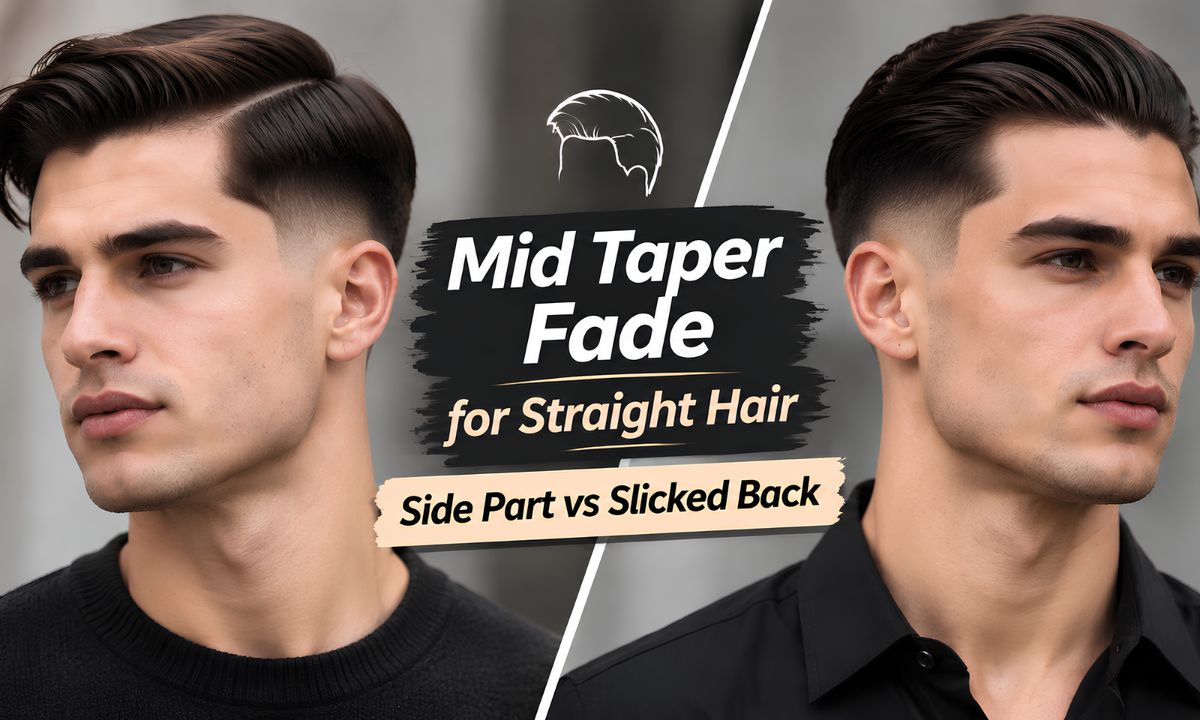

Will a mid taper fade work with your straight hair? Yes, and it’s one of the easiest cuts to wear. Pick a side part taper fade if you want a neat, structured look, or a slick back taper haircut if you want a smooth finish that moves away from your face.
Maybe you’re stuck on a few worries. Will the sides stick out, will the top look flat, or will your barber take the fade too high and leave a gap between the top and the sides? Those concerns are fair, because straight hair shows every line and a good blend matters.
This guide walks you through both styles, plus a few extras, step by step. Grab a coffee and read on.
Mid Taper for Straight Hair: 12 Side Parts and Swept-Back Finishes
Think of this section as a menu. You’ll see men’s straight haircuts with a mid taper fade haircut underneath, sorted by how the top sits. Some lean toward a clean part, others toward a brushed-back finish.
Each style has one thing worth noticing: where the top travels and how much weight stays on the sides. That tells you what to ask for. Save the ones you like to your phone, since photos help your barber more than words do. Show a mid taper fade side view and a mid taper fade back view if you can.
1. Classic Straight Side Part
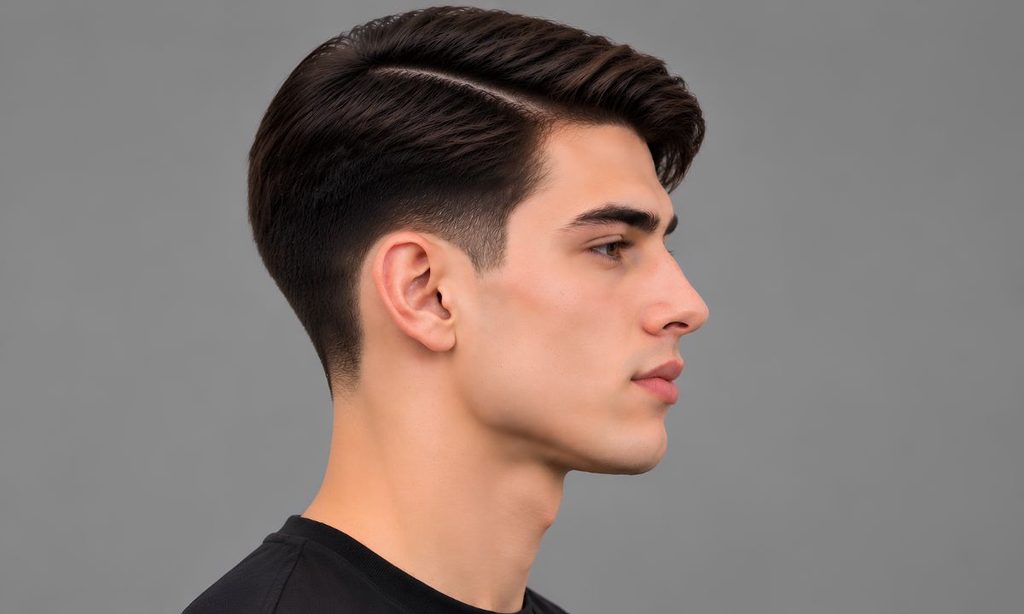
This is the classic side part haircut most guys picture first. A clear natural part sets the direction of the top, and the mid taper cleans up the temple and sideburn. It works because the sides keep some length behind the ear.
That weight connects into the top instead of fighting it, so you get a clean side part hairstyle that looks sharp without much effort. It’s a safe pick if you’re not sure where to start.
2. Side-Part Rear Connection
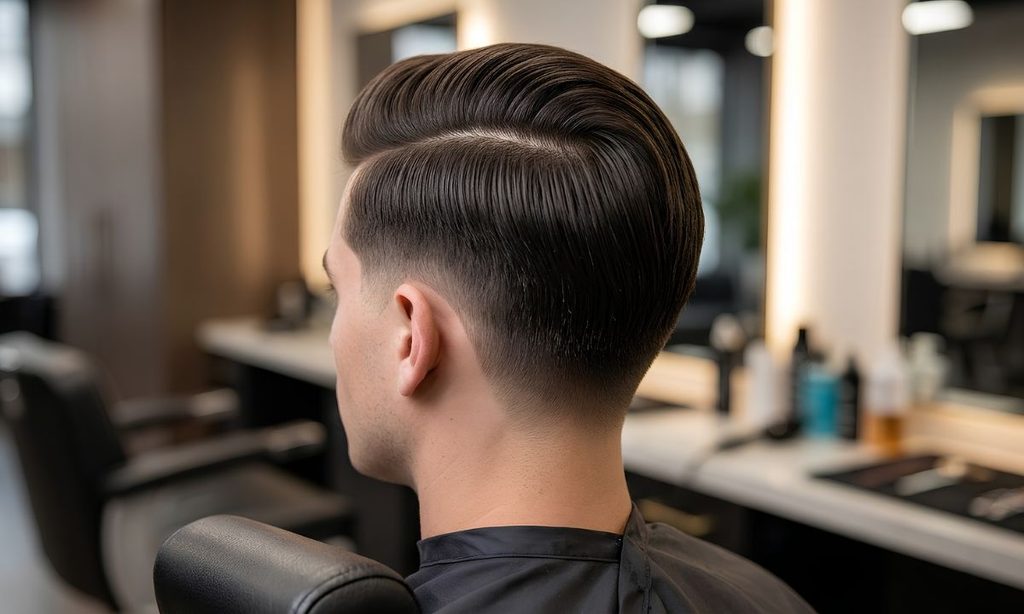
Most people only check the front in the mirror. Your barber doesn’t have that luxury, since the back shows everything. A good side part with tapered sides flows from the crown into a soft neckline.
Ask for a gradual blend at the nape. A hard, boxy edge can look dated on straight hair, and a softer finish grows out better, too.
3. Soft Straight Comb-Over
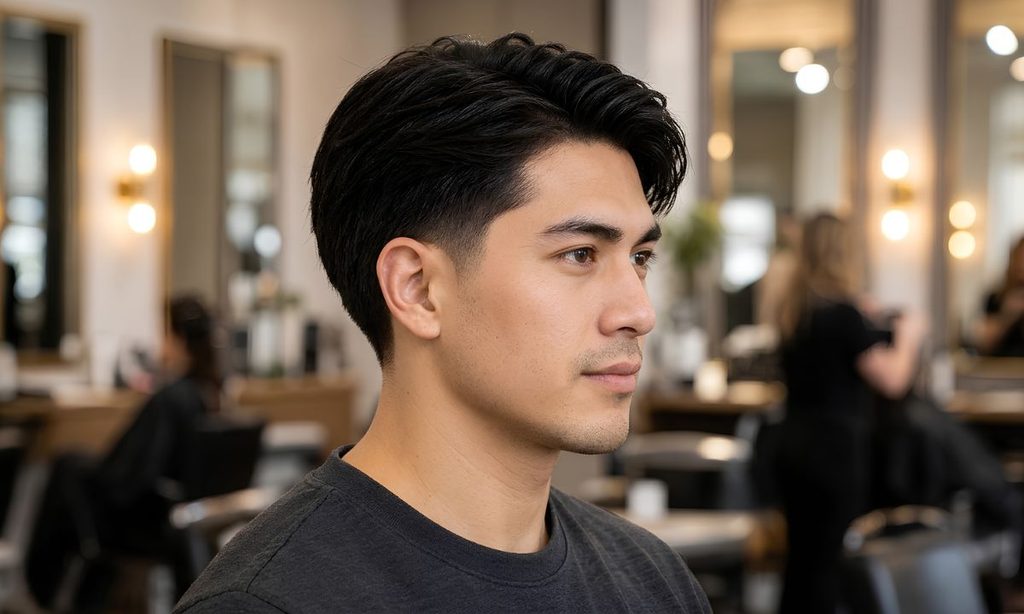
A mid taper fade with comb over is the low-drama version of a side part. There’s no shaved line and no sharp split. The top simply sweeps to one side with a little lift at the front.
It suits guys who want a low maintenance taper fade. You comb it, add a touch of cream, and go. Five minutes is plenty on most mornings.
4. Directional Crown from Behind
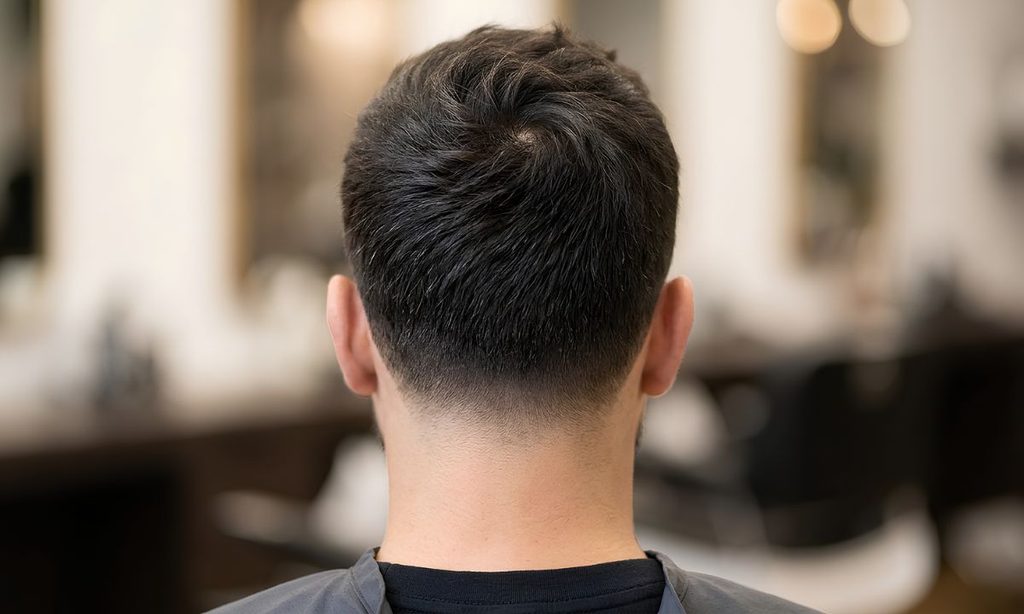
Straight hair remembers which way it grows. If your crown swirls the wrong way, the whole style fights you, so your barber should cut with that direction, not against it.
Blow-dry the crown first while the hair is damp, then set the front over the top of it. You’ll notice the top holds its shape much longer.
5. Straight Slicked-Back Finish
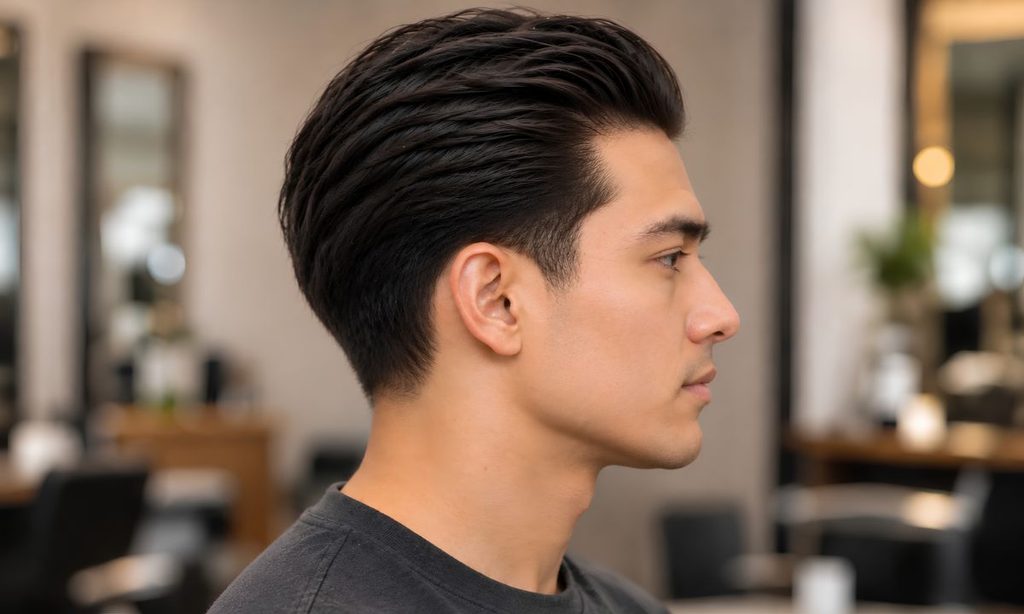
This is the slicked back hairstyle for men that never really goes out of style. The front travels backward with a bit of shine, while the mid taper keeps the sides tidy underneath.
You need enough length at the front to make it work. About four inches is a good starting point, since anything shorter tends to spring forward again.
6. Slicked-Back Rear Angle
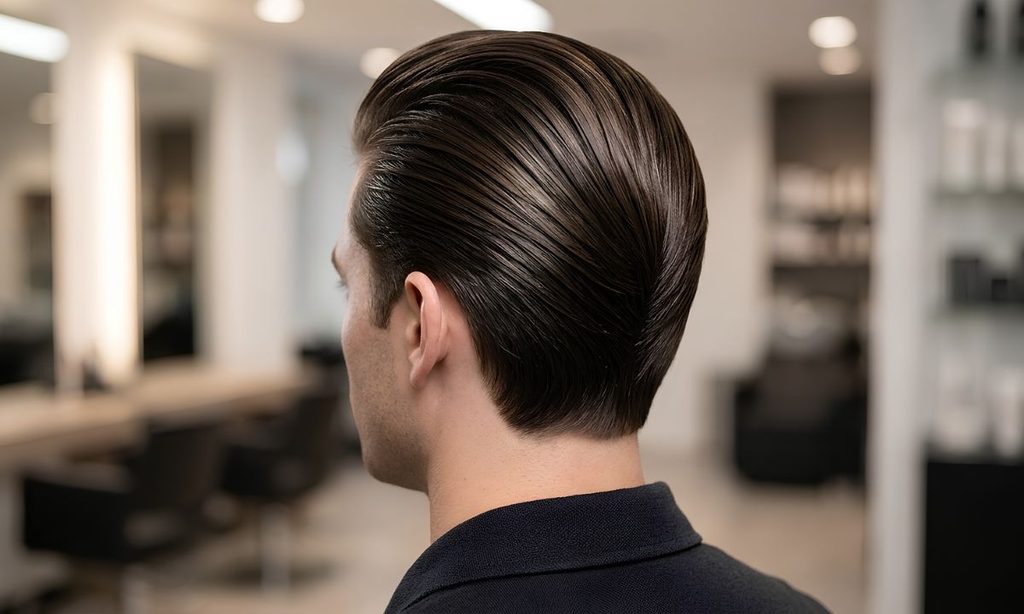
Here’s where a mid taper fade slicked back really shows off. The swept-back direction runs through the crown and into the back, so nothing looks chopped off or stuck on.
Check this angle before you leave the shop. Ask your barber to hold up a hand mirror, because a two-minute check saves you three weeks of regret.
7. Soft Side Part with Low Shine
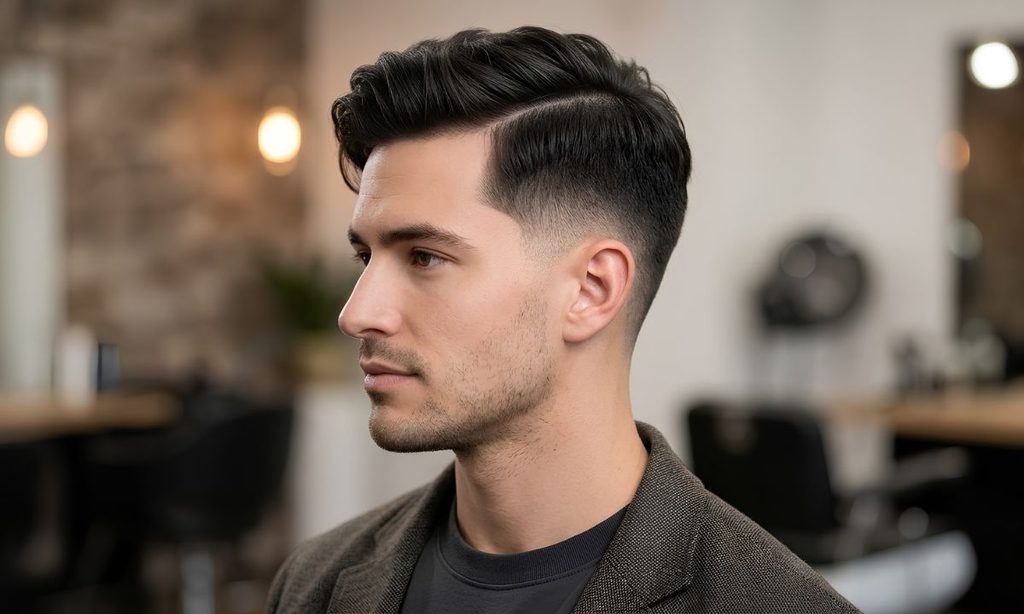
Not everyone wants the wet look. A mid taper fade with natural finish gives you separation without the gloss, and cream or a light paste does the job nicely.
This one fits an office well. It looks like you just have good hair, which is the whole point, and it’s a solid professional taper fade haircut for job interviews.
8. Straight-Hair Nape Detail
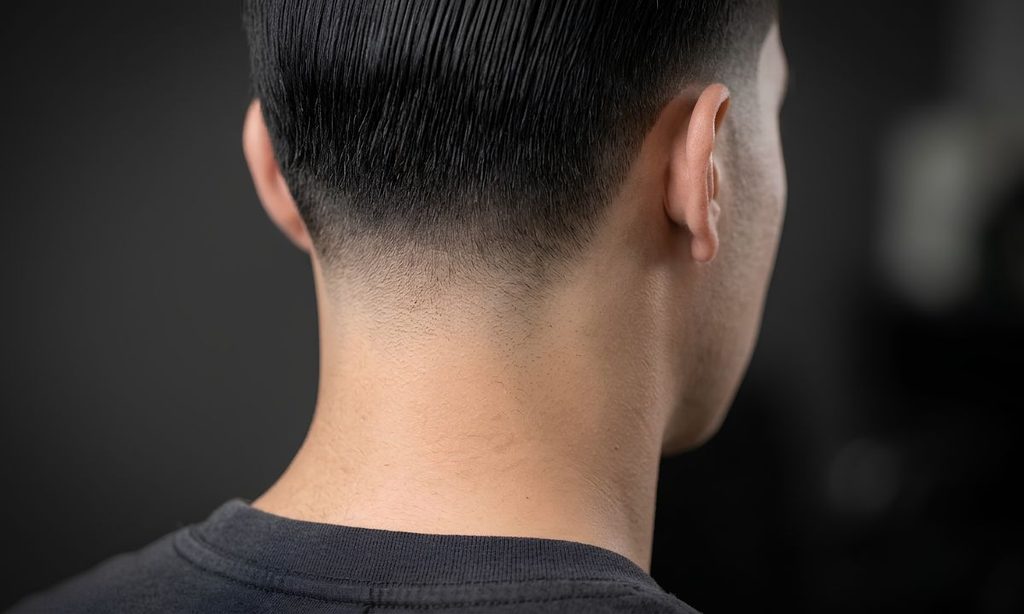
The neckline is the part people notice when you walk away. A mid taper fade with a clean neckline should look tidy but not harsh, because straight hair shows a crooked line fast.
You can pick a rounded, squared, or natural neckline. Rounded blends easiest as it grows out, while squared looks sharper but needs more frequent visits.
9. Matte Swept-Back Direction
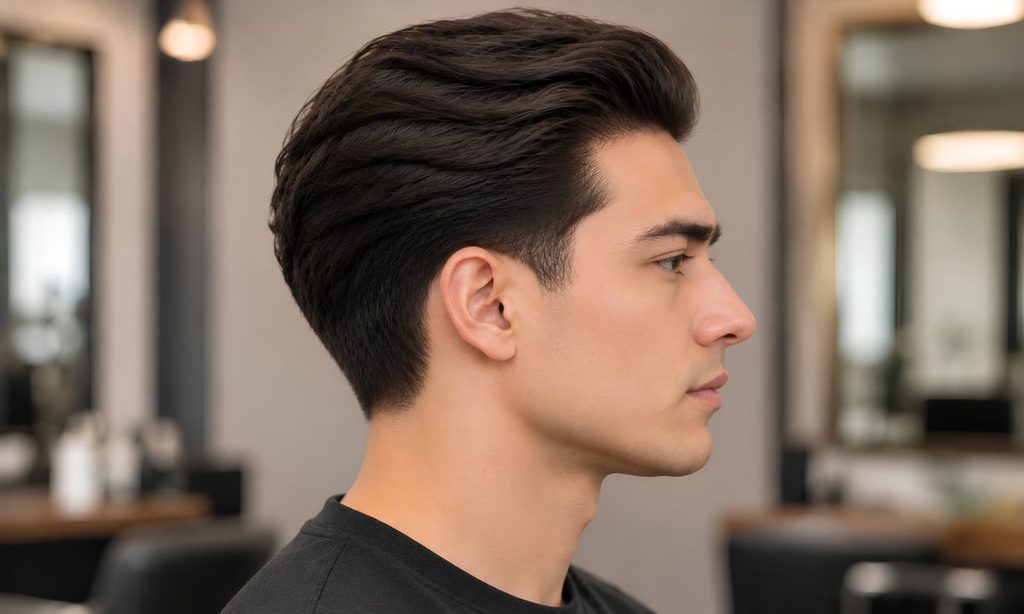
This is the relaxed cousin of the slick back. You get brushed back straight hair with some root lift and no shine, almost like slicked back with the volume turned up.
Use a matte clay or paste and work it through with your fingers, not a comb. The hair looks lived-in rather than lacquered.
10. Swept-Back Crown and Nape
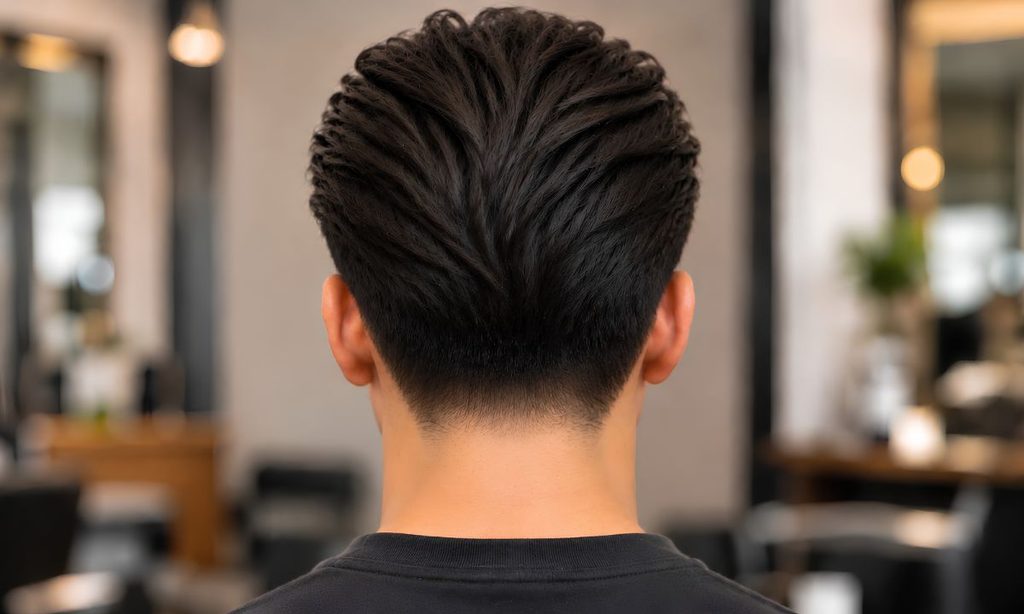
From the back, you should see strand direction and a soft taper at the neck. That’s the sign of a well-planned cut, and it helps the style grow out evenly.
If your hair is thick, ask for a bit of weight removal at the crown. Thick straight hair can puff out at the back, and a small change there makes a big difference.
11. Mid Taper Fade Low Cut
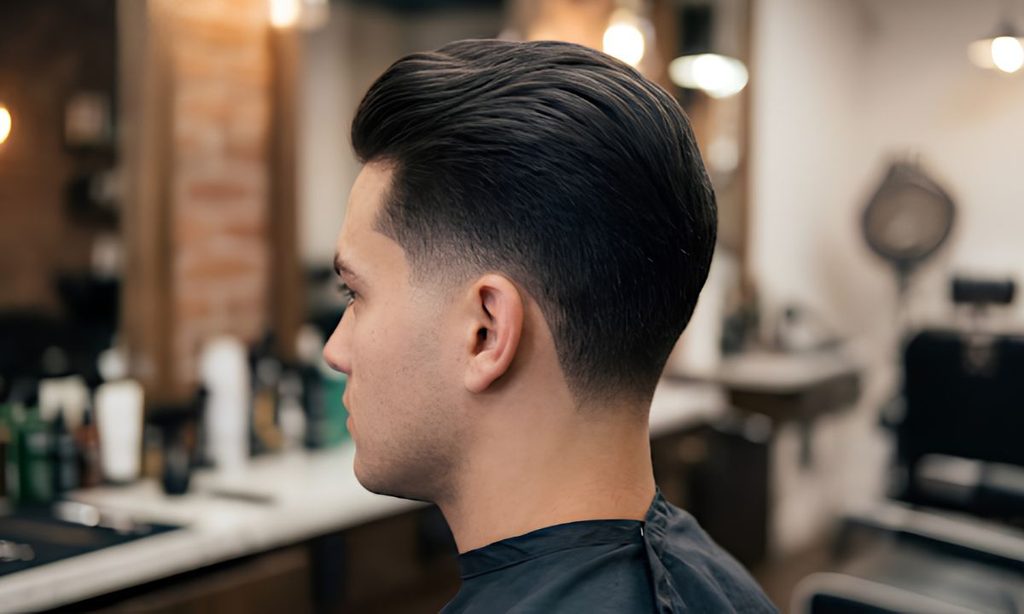
Some guys want the mid taper but with less contrast. A low cut keeps the sides closer to the head and shorter overall, which makes it a good mid taper fade with short hair option.
This version suits a short crop or a neat side sweep. It needs less styling and fewer products, so if you hate fuss, this is your lane.
12. Middle Part Taper Fade
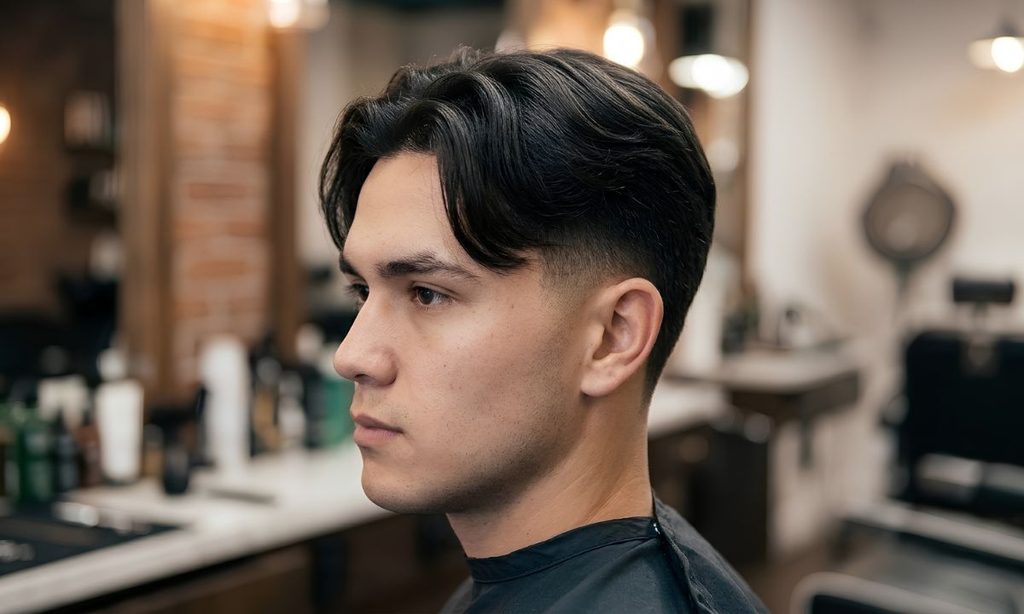
The center part has made a comeback. It works best when your hair falls straight and even on both sides, and the taper keeps those sides from looking heavy.
You’ll want around three to four inches of length. Blow-dry each side away from the part, and use a light cream to keep flyaways down without weighing the hair down.
Also read meaning on Hairdaydiary.com
Why a Taper Works with Straight Hair
A taper only shortens the sideburn and neckline, so the hair above your ears keeps its length. That’s why it’s often the best fade for straight hair if you want a softer look.
A high fade removes much more weight. On straight hair, that can leave the top looking cut off from the sides. A taper avoids that gap and still gives you a clean outline.
What “Mid” Actually Means
Here’s something most guides skip. A low taper starts near the ear and stays short. A mid taper starts around temple height, roughly the top of the ear, and a high taper climbs even higher, closer to the crown.
So “mid” is the middle ground. It’s more visible than a low taper but gentler than a high one, and that balance is why it’s so popular for a modern mid taper hairstyle.
Option 1: Mid Taper with a Side Part
This is the structured choice. Ask your barber to keep weight around the part side, and don’t let them cut the blend so short that the top hangs over a hollow side.
A mid taper fade with a side part needs three to four inches on top. That length lets you comb across without strands standing up. If you want a sharper line, ask about a mid taper fade with a hard part.
How to Style It
Follow these steps and you’ll get a tidy result.
- Start with towel-dried hair. Damp hair is flexible, so it’s easier to shape.
- Set the part right away. Use a comb and make the line before the hair dries.
- Blow-dry in the direction you want. Keep the dryer moving so the hair doesn’t frizz.
- Finish with cream, paste, or pomade. Choose based on how much shine you want.
For a modern men’s side part, use a pea-sized amount. More isn’t better, and too much product turns a clean look into a greasy one.
Option 2: Mid Taper with a Slicked-Back Top
This style asks for enough front length to travel backward. If it’s too short, it’ll pop up again within an hour, so four to five inches usually does it.
Blow-drying first matters more than you’d think, because straight hair remembers its root direction. Dry it back, then add a water-based pomade for a polished finish. A straight hair slick back fade also works with a softer paste if you want direction without the shine.
If you want extra height, a mid taper pompadour is your next step. It builds on the same cut with more volume at the front, which is a good move if you like a mid taper fade with volume.
Option 3: Mid Taper with a Textured Fringe
This is a favorite with younger guys, and for good reason. The top is cut with point-cut ends and pushed forward onto the forehead, while the taper keeps the temples and neck neat. Straight hair shows a choppy fringe very clearly, which makes this a great textured straight hair fade, and it helps soften a high forehead.
Leave two to three inches through the top and three to four inches at the front so it reaches the forehead. If your hair is fine, ask for less thinning up front, since a mid taper fade with fringe
can look sparse otherwise.
How to Style a Textured Fringe on Straight Hair
You only need a few minutes and a few products.
- Towel-dry, then mist with sea-salt spray. This adds grip to slick strands.
- Blow-dry the top forward with your fingers. A brush smooths it too much.
- Warm a pea-sized amount of matte clay. Rub it between your palms first.
- Pinch the ends into pieces. Don’t overdo it, or the fringe looks messy.
Best Top Styles for a Mid Taper on Straight Hair
Not sure which top fits you? This table lines up the common choices, so use it as a starting point when you talk to your barber.
| Top style | Top length | Product | Best for |
|---|---|---|---|
| Textured fringe | 2 to 3 in, 3 to 4 in at front | Matte clay or paste | Casual, modern look |
| Side part | 3 to 4 in | Cream or light pomade | Office and formal |
| Slicked back | 4 to 5 in | Water-based pomade | Polished, smooth finish |
| Soft comb-over | 3 to 4 in | Cream | Low-effort daily styling |
| Short crop | 1 to 2 in | Matte paste | Minimal styling |
| Pompadour | 4 to 6 in | Pomade plus blow-dry | Height and volume |
If you want a quick rule, go longer for polished looks and shorter for easy mornings. That alone answers most straight hair styling ideas questions.
Side Part vs Slick Back: Which One Should You Pick?
This is the real fight behind the title. A side part looks structured and tidy, while a slick back looks smooth and a bit bolder. If you wear a collared shirt most days, start with the side part. If you like a sharper, more dramatic look, try the slick back.
Your hair thickness matters too. Fine hair can look flat when slicked back, and thick hair can look heavy in a side part unless it’s thinned slightly.
Mid Taper vs Mid Fade on Straight Hair
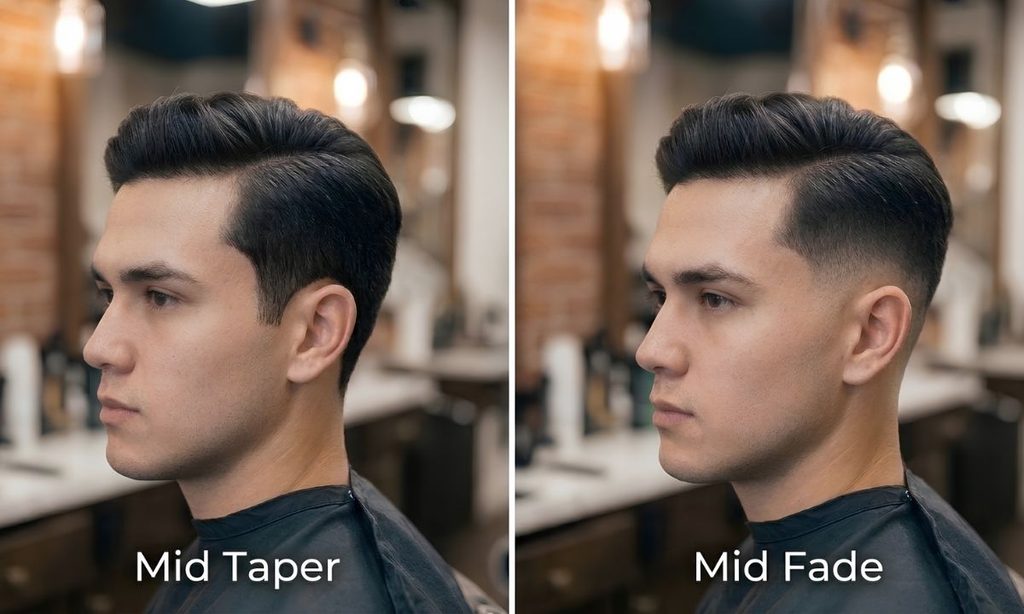
A mid taper blends only the sideburns and neckline, so the hair above the ears stays longer and lies flat. A mid fade takes a band around the whole head at mid height. That means more scalp shows with a fade, and an uneven blend shows up fast on straight hair.
Many guys ask about a mid fade for straight hair when they really want a taper. Choose the taper for a softer, office-friendly look and the fade for stronger contrast. Either way, tell your barber exactly where you want the blend to start.
Which Clipper Numbers Are Used?
There’s no fixed recipe. Many barbers start with a #0 or #0.5 at the bottom of the sideburn and neck, then blend up through a #1 and #2 to the length left on the sides.
For a rough sense of scale, a #1 leaves about an eighth of an inch and a #2 leaves about a quarter inch. Exact lengths vary by brand, so treat these as ballpark numbers.
The top is usually cut with scissors, which makes it easier to texture or part. Ask for a clipper-over-comb finish so the taper fade around ears looks smooth and not stripy.
What to Ask Your Barber
Walking in with a clear request saves you from guessing games. Here’s a line you can use almost word for word:
“I want a mid taper at the temples and neck. Keep weight through the upper sides to connect to my straight top. I wear it side parted, so leave the front and parting area long.”
Swap “side parted” for “slicked back” if that’s your style. Then say whether you want the bottom shadowed, zero, or skin, because that one detail changes the whole look.
A mid taper fade barber guide is only useful if you actually use the words. Photos plus a short script beat a long speech every time.
Common Straight-Hair Problems
Straight hair is easy to love and a little unforgiving. It shows mistakes, it lies flat, and it sometimes grows in odd directions. Luckily, most issues have simple fixes.
Visible Guard Lines
Straight hair can expose dark bands where one guard meets the next. A careful blend matters more than going as short as possible, so ask your barber to finish with clipper-over-comb.
Flat Top
If your hair clings to the scalp, give it lift with a blow dryer. Dry the roots up and back before you add hold, then use a light paste instead of a heavy gel.
Sides That Stick Out
Some straight hair grows outward at the sides. That usually needs better weight control above the taper, not a higher fade, so ask your barber to take a little length off the upper sides.
Cowlicks, Fine Hair, and Thick Hair
Cowlicks are the sneaky troublemakers. If yours sits at the front, a side part can fight it, so brush the hair in the direction the cowlick wants to go.
Fine hair needs volume and a light hand with product. A bit of sea-salt spray helps it hold shape, and you should skip heavy pomades, since they can make it look thin.
Thick hair has the opposite problem. It can puff out at the sides and back, so ask for some weight removal and use a stronger hold product.
Product Choice by Finish
Choose products by the finish you want, not by hype. Hold and shine are the two things that matter. Here’s a quick guide for hair products for slicked back hair and more:
- Natural, low shine: styling cream or light paste.
- Matte and textured: clay or matte paste.
- Classic and polished: water-based pomade.
The best pomade for straight hair depends on your goal. For a slick back look, pick a flexible, water-based pomade. For a hair wax for slick back styles, look for medium hold so it doesn’t harden.
Start with a small amount and add more if needed. You can always add a product, but you can’t take it out, and washing it out is the only reset button.
Mid Taper Fade Maintenance
A taper stays clean for about three to four weeks. After that, the neckline and sideburns start to look fuzzy, which is the classic sign it’s time for a tidy-up.
Between visits, wash regularly and use a light conditioner. Don’t try to trim the neckline yourself with scissors, because a small mistake there is hard to hide.
When Is It Time for a Trim?
Watch the shape, not just the calendar. The taper feels untidy when the sideburn and neckline lose their definition, and the top needs attention when it stops holding direction or feels heavy.
You can refresh the edges without shortening the top. Just tell your barber you’re only after a clean-up, and you’ll keep your length while resetting the outline.
Frequently Asked Questions
How long should my hair be for a mid taper fade?
For a side part, aim for three to four inches on top. For a slick back, four to five inches works better, and shorter hair suits a crop or textured fringe.
Is a mid taper fade professional enough for work?
Yes, especially with a side part and a matte finish. A taper looks tidy without being too bold, so it’s a safe choice for most offices.
Does a mid taper suit thin hair?
It can, if you keep the top a little longer. Use light products and avoid heavy pomades. A soft comb-over also hides thin spots well.
How often should I get a mid taper fade?
Most guys go every three to four weeks for a sharp look. A softer grow-out can stretch to five or six weeks, depending on how fast your hair grows.
Taper or fade for straight hair?
A taper keeps more length and looks softer. A fade gives stronger contrast but shows more scalp, so pick based on how bold you want to look.
Conclusion
A mid taper is a simple way to get a sharp cut without losing length. Pair it with a side part for a tidy look, or with a slick back for a smoother, bolder finish.
The trick is clear communication with your barber. Use photos, say where the blend should start, and speak up about the top. Small details make the biggest difference.
